What does it take to drive employee AI adoption at your company?
Longtime product operator and creator Peter Yang has been investigating, sharing, and applying AI best practices for years now, and he’s been getting this question more than any other. So have I! We decided to collaborate to bring you the best, most in-depth answer to this increasingly important topic.
Peter interviewed founders and product leaders at six fast-growing AI-forward companies and collected all of their best tactics for driving employee AI adoption. This post includes their best 25 battle-tested AI tips that you can implement right away at your company.
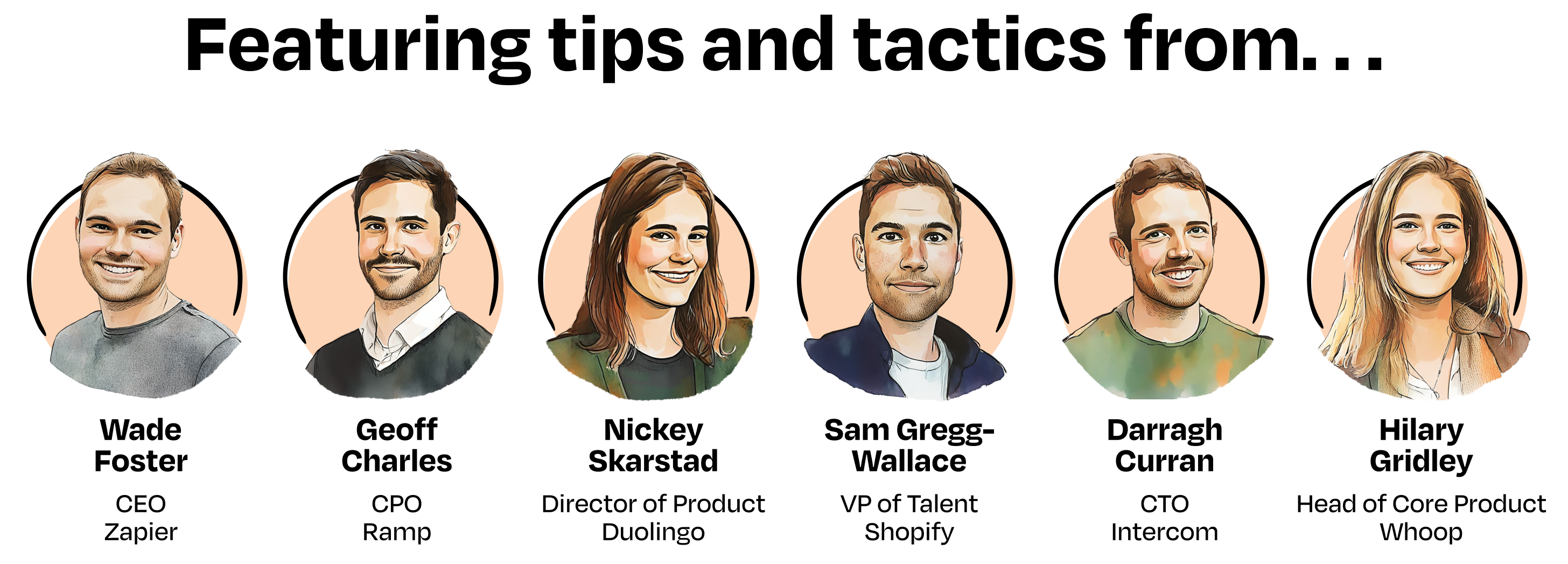
Peter shares more practical AI tips via his newsletter and YouTube channel.
P.S. You can now also listen to these posts in convenient podcast form: Spotify / Apple / YouTube.

I never feel alone anymore when I’m stuck on a problem.
From summarizing user feedback to crafting product strategy, having AI as a patient, knowledgeable, and always-available thought partner has completely transformed how I do product work.
But here’s the reality: According to a recent Gallup poll, only 8% of U.S. workers use AI daily. Meanwhile, teams that crack the AI adoption code are seeing incredible results. For example, Zapier’s sales reps save 10 hours per week on lead research, Ramp built AI user personas that give PMs instant feedback on any spec, and Duolingo went from 100 courses in 12 years to 150 courses in just 12 months with AI’s help.
From what I’ve seen and from talking to leaders at AI-forward companies, I’ve learned that:
The biggest barrier to AI adoption isn’t technology; it’s organizational change.
At many companies, employees are struggling with vague AI mandates, procurement bottlenecks, and lack of guidance on the highest-impact use cases to focus on first.
After interviewing leaders at the 6 AI-forward companies below, I’ve identified 5 recurring steps that companies can take to supercharge AI adoption:
- Explain the how
- Track and reward adoption
- Cut the red tape
- Turn enthusiasts into teachers
- Prioritize the high-impact tasks
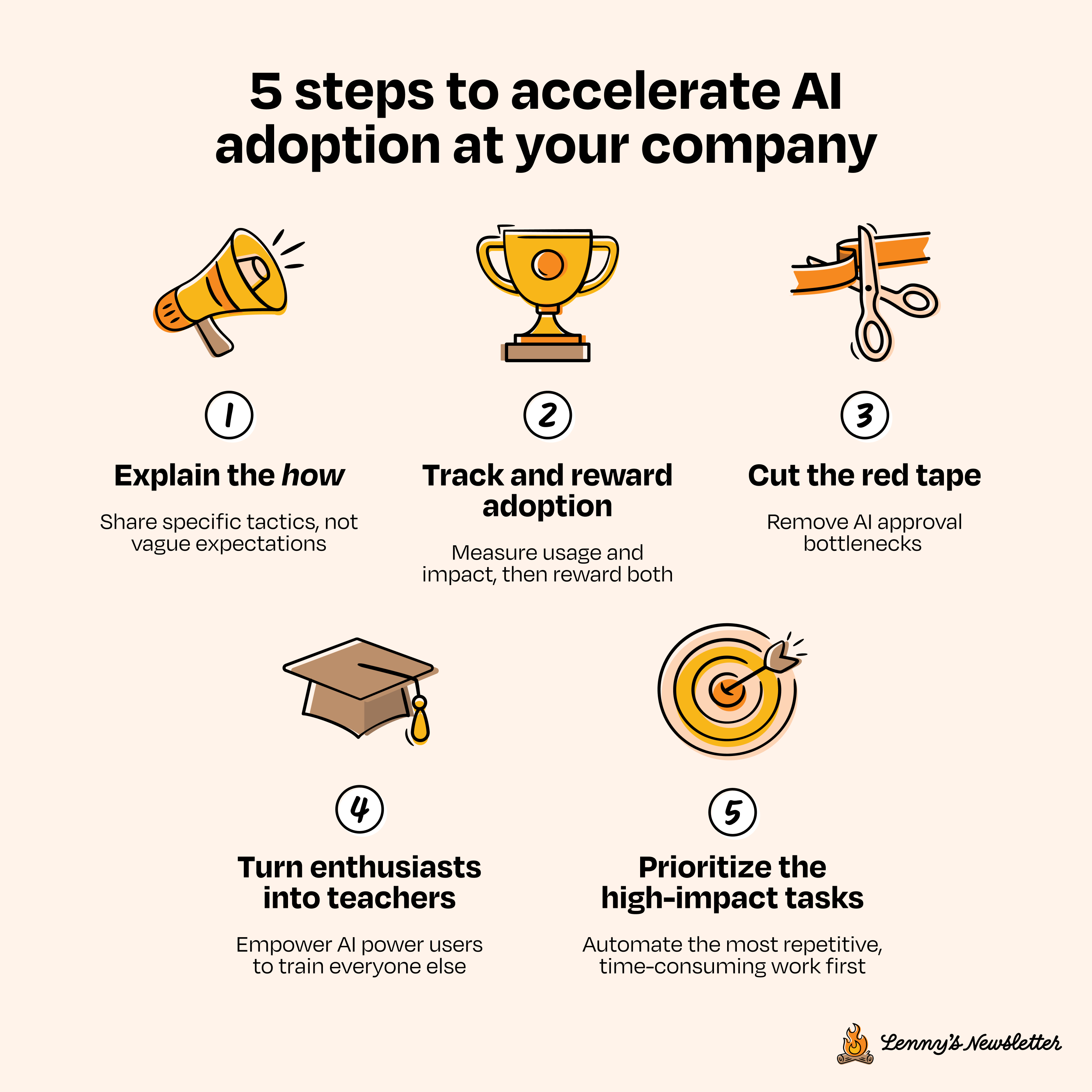
Let’s break down exactly how these companies made it work.
1. Explain the how
Saying “we are AI-first” means nothing if employees don’t know what that actually means for their day-to-day work.
The companies that succeed provide specific tactics that employees and teams can adopt to meet those expectations.
Here’s what this can look like:
- Include specific tactics in your memo: Tobi Lütke, CEO of Shopify, didn’t just say that “using AI is now a baseline expectation” in his now-famous memo. Instead, he shared concrete tactics he expects to see, like making AI prototyping part of the company’s GSD (get shit done) process.
- Declare a “code red” moment: Wade Foster, CEO of Zapier, called an all-hands-on-deck moment in March 2023 after ChatGPT’s launch. He then shared a playbook and gave all employees a week off to put it into practice.
- Define what “embracing AI” means: Luis von Ahn, Duolingo’s CEO, defined AI adoption as both “making our products better” and “empowering employees to do their best work.” Teams were encouraged to use AI for everything from speeding up lesson creation to prototyping.
- Embed with individual teams: Darragh Curran, Intercom’s CTO, set a goal to “2x productivity with AI” and then spent a week every month embedded with individual teams to identify and execute on the 2x opportunities.
- Lead by example in real time: When a PM brings a problem to Hilary Gridley, Whoop’s Head of Product, she’ll say, “Want me to show you how I solve this with AI?” Then she shares her workflows live.
You don’t need to be an executive to drive this change. At Roblox, I constantly share my favorite AI workflows in Slack and one-on-ones. I’ve even started screen sharing AI’s output during meetings to solve problems with my teammates in real time. Seeing a colleague save time with AI is an incredibly strong incentive to try it yourself.
2. Track and reward adoption
Like any good PM, you should track AI adoption as inputs (who’s using AI) and outputs (what business value it’s creating). You should also reward employees who are leading the charge to keep the momentum going.
Here’s how top companies are tracking and rewarding adoption:
- Make AI adoption part of performance reviews: Shopify asks employees to rate colleagues on a 1-to-5 scale for how well they “reflexively use AI tools for improving and amplifying work outputs.”
- Publish AI usage by team: At Ramp, leadership shares the number of AI power users (5+ actions a week) for tools like Cursor, Claude Code, and ChatGPT. This transparency creates natural accountability across teams.
- Track team-specific impact: Zapier tracks the impact of AI adoption by function. In sales, for example, when targeted leads engage with marketing content, AI auto-packages that information for the account rep—leading to 10 hours saved per week per rep.
- Use proxy metrics for productivity: Intercom tracks merged pull requests as a proxy for productivity gains. They’re already seeing a “durable improvement (about 20% year-over-year)” from AI-assisted development.
- Make it a daily habit: Whoop gave employees a 30-day challenge with bite-size 2-minute tasks to complete and rewarded those who kept the longest streak.
The point is that:
People will change their behavior with the right incentives.
Tracking both the leading indicators (AI usage) and lagging indicators (business results) creates a link between AI adoption and the real impact on teams, businesses, and people’s careers. Connect the dots on impact for your employees and you’ll see adoption skyrocket.
3. Cut the red tape
Most companies have long approval processes for AI tools. But what they don’t realize is that their employees are already using AI. They’re just using it from their personal accounts.
Cut the red tape if you don’t want employees to use AI tools that aren’t approved:
- Create an AI learning budget: Duolingo gave every employee $300 to try AI tools, courses, and subscriptions. This incentivizes constant experimentation.
- Assign a lead to expedite approvals: Zapier assigned a lead PM to own working with procurement, legal, and engineering to fast-track AI tool approvals and eliminate bottlenecks.
- Give employees time to tinker: “No time” was the main reason employees cited for not trying new AI tools, so Intercom CTO Darragh encouraged managers to give employees dedicated time to skill up.
- Provide multiple tool options: Shopify provides access to a wide range of tools, including Claude, Perplexity, Cohere, Gemini, Cursor, Copilot, and Claude Code. They also encourage employees to contribute to a growing library of AI prompts and agents.
- Embrace internal enthusiasm: Whoop lets employees nominate tools they’re excited to trial, like Fireflies for note-taking and Zapier for automation.
If you’re wondering which tools to approve, here are my personal favorites:
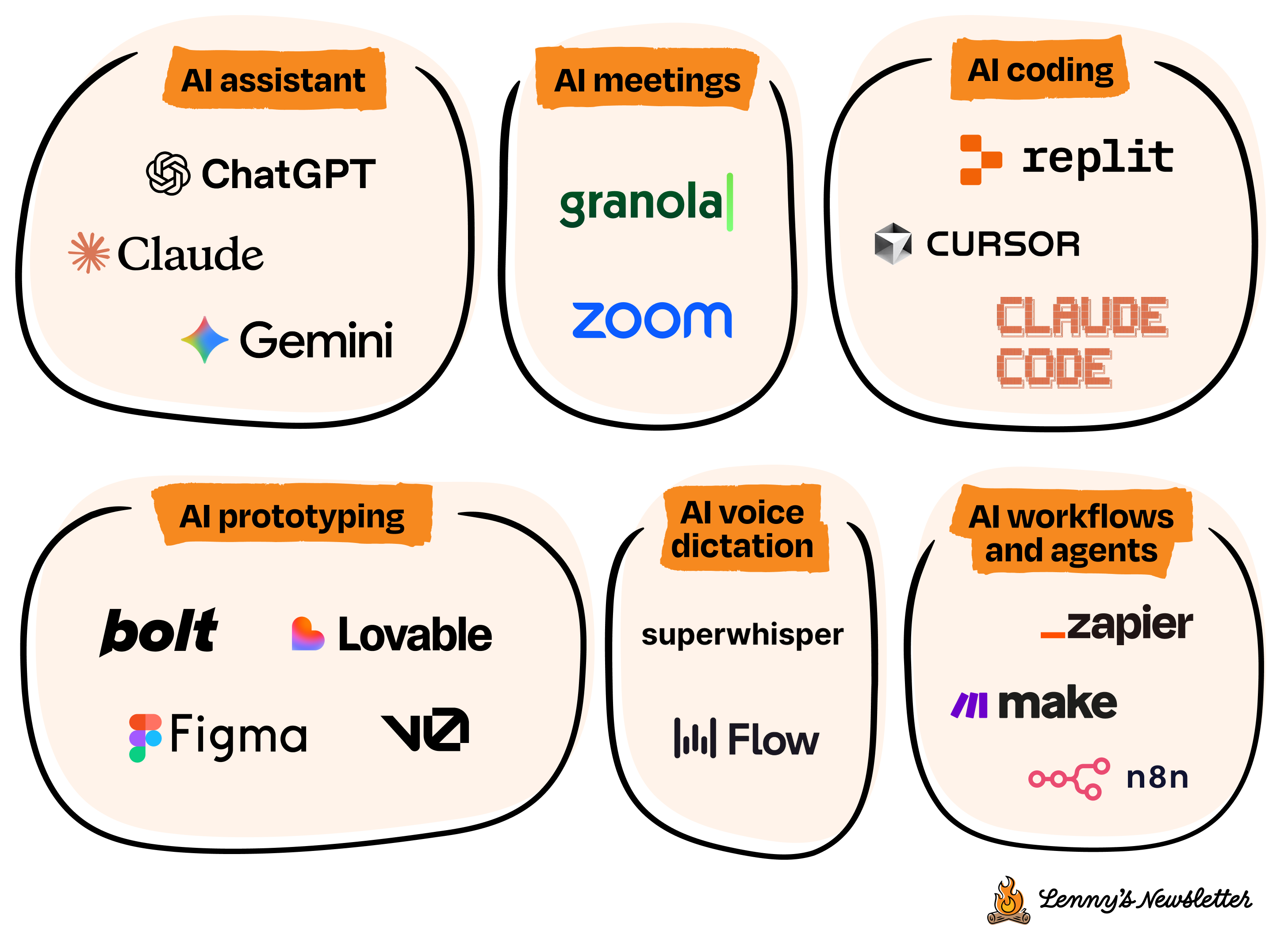
As an employee, don’t be afraid to champion your favorite AI tools even if you’re not responsible for procurement.
4. Turn AI enthusiasts into teachers
Every company has AI power users who are just itching to share what they’ve learned. Set up the right channels and resources for them to train everyone else.
Here’s how to turn your AI enthusiasts into teachers:
- Run AI learning villages: Shopify hosts dedicated AI training at company events, with hands-on challenges and subject-matter experts. They have a “build in the open” culture where teams constantly share AI experiments.
- Host FriAIdays and show-and-tells: Duolingo protects two-hour blocks every Friday for AI experimentation and demos. They also do “AI Show and Tell” at all-hands meetings.
- Create an AI SWAT team: Ramp’s cross-functional team identifies each group’s top AI automation need and builds solutions. They also run PM AI offsites for vibe coding.
- Host regular demos and hackathons: Zapier hosts live demos that attract over 60 employees every week and quarterly hackathons where the best prototypes are presented to leadership.
- Make “upleveling others” part of promotion: Helping others get better at using AI is a great signal of leadership. Hilary at Whoop looks for examples of how employees improve others’ AI fluency when reviewing promotions.
An AI-forward culture is one where employees feel comfortable sharing not just what they’ve built but how they did it. At Roblox, we have an “#AI-tips-and-workflows” Slack channel where employees share everything from basic prompting tips to weekend AI projects.
5. Prioritize the high-impact tasks
Most companies fail at AI adoption because they try to do everything at once. Instead, find the high-volume and repetitive tasks that are taking up the most employee time and streamline those first with AI.
Here are the tasks that AI-forward companies are focusing on:
- Automate support triage workflows: Zapier built a workflow that checks Zendesk tickets and identifies customers ready for sales conversations, turning customer support into a revenue driver.
- Streamline performance review prep: Shopify built an AI tool to help employees summarize feedback and identify strengths and working areas. This cuts review time and improves discussion quality for managers and their reports.
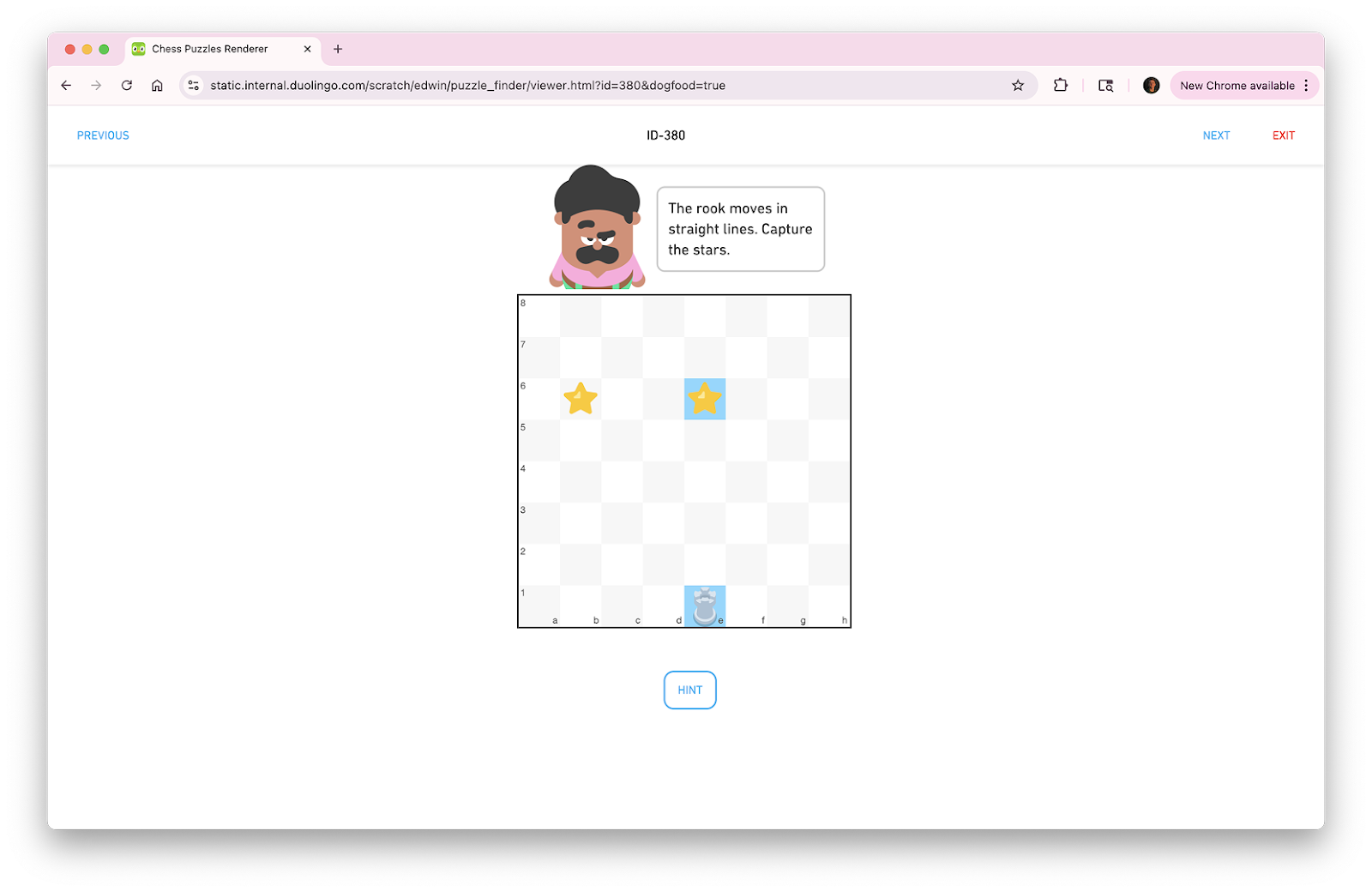
- Create content with AI: Duolingo rebuilt their course content creation process with AI, going from 100 courses in 12 years to 150 courses in just 12 months. From CPO Cem Kansu: “We vibe coded the first Duolingo Chess lesson in hours instead of weeks.”
- Build AI personas: Ramp built AI personas loaded with all their user research context. PMs can now give any product spec to these personas and get instant feedback on what they’re missing or haven’t thought through.
- Empower employees to build internal AI tools: A PM on Hilary’s team at Whoop built an evaluation tool that tests whether prompts perform better across dozens of persona types—without going through engineering.
When it comes to building internal (and external) AI tools, here’s what separates real adoption from theater:
Instead of focusing on shiny demos, look for rigorous data and evaluations.
I’ve seen too many PMs present flashy demos to executives only to stumble when asked about data and evaluations (including some lessons I learned the hard way!).
When you share your AI product, you should clearly answer four questions: What customer problem are you solving? Can AI solve it better than non-AI solutions? What ground-truth dataset and evaluations do you have? How have you prepared for the model to fail?
True AI adoption happens when teams become skeptical of flashy demos and demand to see the rigor behind AI products. When employees start asking about accuracy metrics, evaluation frameworks, and failure modes—that’s when you know AI adoption is real.
Where to go from here
The companies succeeding at AI adoption understand that it’s not just about making vague AI mandates. Instead, they explain the “how” with detailed tactics, and track both usage and impact. They eliminate procurement roadblocks, turn enthusiasts into teachers, and build AI products with rigorous evaluations to streamline high-impact tasks.
The goal is to empower every employee to work with AI to solve their problems. Someone in sales, product, or operations might create an AI tool that transforms your business.
What tactics are you implementing at your company? I’d love to hear about your wins (and failures) in the comments.
Thanks, Peter! For more from Peter, check out his newsletter and YouTube channel.
Have a fulfilling and productive week 🙏
If you’re finding this newsletter valuable, share it with a friend, and consider subscribing if you haven’t already. There are group discounts, gift options, and referral bonuses available.
Sincerely,
Lenny 👋