Reminder: If you live in the U.S., don’t forget to vote today!
Matthew Dicks is the author of the single most actionable and practical book I’ve ever read on the skill of storytelling—Storyworthy. He’s also a record 61-time Moth StorySLAM champion, 10-time GrandSLAM champion, and beloved past podcast guest. He just published a new book, Stories Sell: Storyworthy Strategies to Grow Your Business and Brand, which teaches you how to use the power of storytelling in business. My favorite part of Matt’s new book is very practical and actionable advice about how to be funnier. Who doesn’t want to be funnier? So I asked Matt to share his favorite advice here in the newsletter, and he generously agreed to cover seven of his favorite techniques—including tons of examples, simple frameworks, and ideas you can put into practice immediately. I hope this post makes your work life just a little bit more fun.
Matthew Dicks is an internationally bestselling author and award-winning slam storyteller with a record-breaking sixty-one victories at the Moth StorySLAM competition and ten victories at the GrandSLAM. Matt teaches storytelling and public speaking to individuals, corporations, nonprofits, universities, and schools around the world. His clients have included Amazon, Google, Microsoft, Salesforce, The World Bank, Harvard University, and the FBI.
I have good news.
Humor can be taught. It’s not some natural talent or gift offered by the gods. It’s a learned skill, generally mastered by four types of people:
- Those in desperate need of attention, probably beginning at an early age
- Those who obsess over comedy
- Strategic listeners
- Those who study comedy and put in the time to learn how it works
That means that you too can be funny. And when you’re able to make people laugh, they like you more, you set yourself apart, and you become a more effective leader.
The life-changing power of being funny (even when you’re a meathead)
When I was 32 years old, I went to an art museum for the first time with a woman I loved who did not love or even like me. But she loved art, so I didn’t tell her that I had never set foot in an art museum before. I was hoping she might someday fall in love with the person I wanted to be instead of the meathead I was at the time.
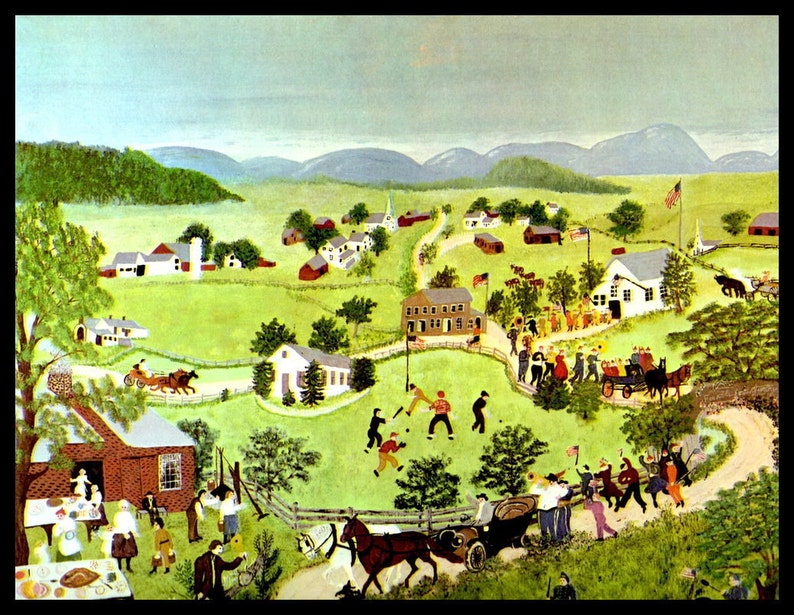
I was standing in a gallery that was supposed to be filled with “Grandma Moses” paintings, but I couldn’t find a single one. I was standing in front of a beautiful painting of a little town, falling in love with fine art for the first time, but still in search of a single “Grandma Moses” painting.
Then it occurred to me:
“Grandma Moses” paintings are not paintings of Grandma Moses. They’re by her.
Again, I was 32 years old—a college graduate teaching elementary school and writing my first novel—and I thought paintings were of the painter of the painting.
Again, I was a meathead.
I was married to this woman for three years before I finally told her the truth about that day in the museum:
“It was my first museum ever.”
“I didn’t know what I was doing?”
“You kept saying the word docent, but I couldn’t figure out what that word meant.”
“I was searching for Grandma Moses paintings of Grandma Moses.”
“Can you believe it?”
My wife’s response:
She laughed. That was my goal. It’s always been my goal.
It’s this kind of humor that first attracted her to me—and keeps her attracted to me even now.
You probably like me a little more, too, after reading that story.
In fact, when Elysha was asked (in my presence) when she first started falling in love with me, she said it all began during a dinner at Chili’s—our first meal together. “Ask Matt a question, and he tells you a story. He told lots of stories that night, and I never stopped laughing. I realized that he was unlike anyone I had met before. And I knew that if I married him, I’d never be bored.”
That’s the power of humor.
And if you’re not naturally funny, you can learn to be funny and get that power for yourself. Humor is simply deploying strategies to make other people laugh.
Strategies. Just like the ones you learned to grow your business, drive a car, and avoid Phil while at work.
This is profoundly good news in the business world because the benefits of making people laugh are enormous. In addition to getting people to like you, humor is a highly effective means of holding an audience’s attention, convincing people that you can be trusted, and ensuring that you are remembered. It’s also perceived as a sign of intelligence, so making people laugh will cause them to view you as smart, even if you’re a meathead.
Forbes recently identified “a sense of humor” as the fourth most important quality in a leader. (Even better, the business world—with the exception of advertising and the Berkshire Hathaway annual shareholders meeting—is often devoid of humor, which means if you are funny or even mildly amusing, you will have a significant advantage over the competition.)
There are a kabillion reasons why you should be funny. Here’s one:
Making someone laugh alters a person’s brain chemistry. Laughing swaps the cortisol in our bloodstream with dopamine, oxytocin, and endorphins—three powerful chemicals that every leader and public speaker should want in their audience’s brains.
Why?
- Dopamine can enhance learning, motivation, and attention.
- Oxytocin is considered the “empathy hormone.” When it enters the bloodstream, it creates feelings of connection and relatability to the person producing the effect.
- Endorphins trigger feelings of pleasure.
Other health benefits from laughter include stress relief, reduced anxiety, a sense of safety, and improved mood.
So how can you be funny?
Let’s start by understanding humor better. Many things can be said about how to make a person laugh, but it essentially boils down to one thing: surprise.
Humor is the strategic assembly of specific words, spoken in a specific way, to create a surprise that produces a smile or a laugh.
It’s the same basic principle behind a jump scare in a horror movie, the weeping you did at the end of Titanic, or your spontaneous cheering at the end of Jaws.
It’s surprising when Christopher Walken asks for more cowbell in the classic SNL skit (after Will Ferrell’s character has already pounded the hell out of the cowbell). In any normal situation, the Walken character would say, “Too much cowbell!” or “Ditch the cowbell!” so when he asks for more, it’s surprising and, therefore, funny. It’s the way he asks for the cowbell, too, because it’s the words we choose and the way we say them that produce a laugh.
This is why this post would be infinitely funnier if I were speaking the words to you instead of your reading them yourself. It’s a hell of a lot easier to be funny aloud than on the page.
When Wanda Sykes tells the audience: “I got a nice gut going on. Yeah, Esther is out of control. Yes, I call her Esther. When I was in my 40s, I got this little fat roll. I just named it. That was Esther. And now Esther is spreading. Esther is roaming around my body there. Esther’s all creeping around my back like, ‘Hmm, what’s back here? Let’s see what’s back here.’ ”
… it’s surprising for lots of reasons. First, she’s acknowledging her gut, which isn’t something people typically do, at least not publicly.
She also uses specific language. “I got a nice gut going on” is funny. We might say, “I have a nice vacation going on” or “I have a nice career going on” or “I’ve got a great pot of stew going on,” but she applies these words to her gut.
Surprise.
She’s also named her gut—Esther. That’s surprising. Some weirdos name their cars and even their houses, but their belly fat?
That’s surprising.
Then she personifies her gut in the final sentence by giving Esther voice, intention, and even locomotion.
It’s all something we have never heard before in terms of content, language, and characterization. It’s funny because it surprises us.
If you heard her speak these words aloud, it would be even funnier.
How do people like Wanda Sykes and Christopher Walken produce comedic surprises?
There are many ways. I currently teach 27 different strategies, but I’m always adding to the list. Whenever I laugh, I ask myself how the person speaking made me laugh. If the strategy is new, I reproduce it and teach it to others. As long as people are making people laugh, new strategies are being invented all the time.
Seven strategies to be funny in business
1. Nostalgia
When I was a kid, my family owned a VCR that weighed about 750 pounds and was attached to the remote control by a cord as thick as a toddler’s forearm. When I wasn’t using it as a remote, it doubled as a trip wire that I would use to knock my brother, Jeremy, on his ass when he ran through the living room.
We watched movies by inserting film encased in plastic shells into that machine, sitting beside decorative ashtrays made in middle school art class, eating gluten-packed Vienna Fingers, and drinking Capri-Sun on an orange shag carpet that literally needed to be raked once per week.
That is nostalgia. If you remembered any of this, it likely made you smile. Nostalgia produces comedic surprise because it startles us into realizing how quickly the world has changed.
This strategy is useful in business because we often reference the past when discussing our products and services. It’s a good idea to show clients and customers how our products, platforms, technology, sectors, or company have evolved over time, and that is when we can deploy nostalgia.
- We once were this. Now we are this.
- The world once looked like this. Thanks to us, it now looks like this.
- Remember how happy we once were. Let’s be happy again.
Even when nostalgia does not produce a laugh, it is still informative. It doesn’t sound like a failed joke; it’s simply relevant historical information.
But when done well, it’s often hilarious.
- Spotify featured characters (and the original actor) from the 1984 film The NeverEnding Storyto highlight the extent of their music collection.
- Microsoft’s Internet Explorer is a thing of the past, but this 2013 ad for the web browser used amusing nostalgia to win over users.
- Volkswagen introduced its 2012 Passat with a Super Bowl ad featuring a boy dressed as Darth Vader trying to use the power of the dark side to manipulate objects and even his dog. His father finally uses the car’s remote to give his boy satisfaction, reminding us of how we once believed in the Force, too.
2. Exaggeration
Exaggeration is only funny when it’s clear that you are exaggerating to produce a laugh. Exaggerating in the hope of getting people to believe it is true is called lying.
For example, my VCR did not weigh 750 pounds, and the remote control cord wasn’t as thick as a toddler’s forearm, but that exaggeration produces a laugh because the numbers and sizes are so outrageous that the audience can only assume it’s an exaggeration.
I also exaggerated when I said there are a kabillion reasons to be funny.
I also used the word “kabillion,” which was also surprising.
“Kabillion” also starts with a K, which oddly increases its chances of being funny. Words beginning with a hard K tend to be funnier than other words, probably because that sound is the most surprising of all sounds. It punches us in the face.
Steve Jobs used a visual exaggeration in his 2007 iPhone launch when he showed an image of the new iPhone on the screen: a janky-looking iPod with a kitchen timer. Everyone knew that it wasn’t real but a silly exaggeration of what they all wanted to see.
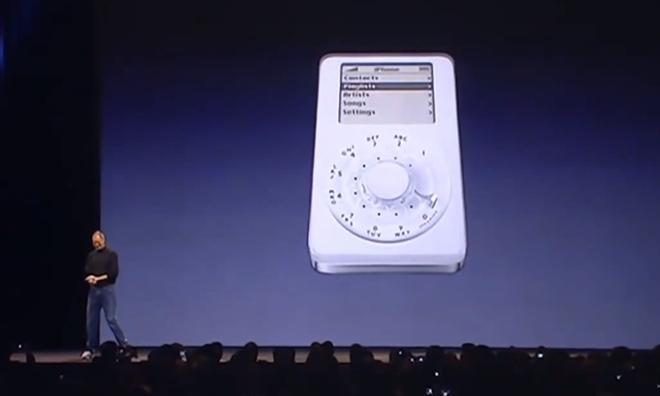
The result: a big laugh. Dopamine. Oxytocin. Endorphins. Brains primed for his message.
Other examples:
The Snickers “You’re not you when you’re hungry” campaign:These commercials exaggerate what a person feels like when they are hungry, before a Snickers bar returns them to their former self.
- A hungry football player plays the game like Betty White
- A hungry college student acts like an angry Joe Pesci while flirting with a girl
- Hungry Marcia and Jan Brady from The Brady Bunch are replaced by Danny Trejo and Steve Buscemi
All exaggerations of what it really feels like to be hungry.
Old Spice commercials featuring Isaiah Mustafa: This ad features a series of exaggerated scenarios designed to make you laugh while underscoring the effectiveness of Old Spice deodorant, thus launching a dusty old brand into the modern world.
3. One of these things is not like the other
Sesame Street used to have a segment called “One of these things is not like the other.” They would show three objects, and one would not fit. It was designed to teach categorization to children.
But comedians use this all the time. My favorite example of this comes from my favorite storyteller, Steve Zimmer. After his family isn’t invited to the neighborhood Hawaiian luau, they have their own barbecue the next week, featuring canned pineapples, ham, and despair.
Two things are in the same category, and then a third that rightly applies to the situation but is as far away from the other two as possible.
My daughter, Clara, is brilliant, keenly observant, and the loudest human being on earth.
My son, Charlie, is a fantastic musician, a surprisingly adept catcher, and thinks he lives in a restaurant where all bowls and plates will be cleared and cleaned by some mythical, unseen busboy after he’s done eating.
This strategy is useful in business because we often describe products, services, and the like. We can do so while also being funny:
Our meal kits produce efficiently cooked, incredibly delicious meals that—if you’re sneaky enough to hide the evidence of the meal kit in your neighbor’s garbage—can fool your partner into believing you made dinner from scratch.
Or…
We’ve added a new feature to our platform that will simplify workflows, shorten the sales cycle, and bore your family to death when you tell them about it tonight.
Now that I’ve highlighted this strategy, you’ll hear it all the time. It’s the bread and butter of stand-up comedy, but it’s also an easily deployed strategy in the business world.
4. Definitions
Imagine that you have a colander. It’s a magical colander because it’s capable of sifting anything—sand, Key lime pie, or your mother-in-law’s passive-aggressive sarcasm.
See what I did there?
When it comes to using this strategy, you need to imagine taking an object or an idea or even a person and sifting them through that colander to extract their essence. You’re looking to define them by a single attribute.
Steve Jobs did this when he described the iPod as “1,000 songs in your pocket.” It wasn’t funny, but it was a simple definition, and it was incredibly effective.
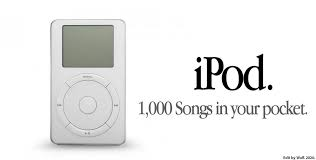
Much better than A portable digital media player that stores large amounts of music, videos, and photos, all controlled via click wheel.
We do the same thing when we call Phil a moron. Phil is probably many things: cockapoo owner, ankle sock enthusiast, origami artist, persistent sufferer of irritable bowel syndrome, Professional Croquet Association fan, communist.
But when we call him a moron, we reduce him to a single attribute. It’s not funny, but if we choose the right attribute, it could be funny.
Allstate has turned disaster into a hilarious character entitled Mayhem who embodies every possible accident facing customers.

We can do this with almost anything.
A chair, for example, is an antigravitational device designed to keep your ass suspended in midair.
It’s also a surprisingly fragile weapon when used to clobber someone in the movies.
A chair is also one of the most simple, ubiquitous, and ancient pieces of furniture on the planet, yet I could never come close to building one because my hands do not function as hands.
In each case, I strained a chair through my magical colander to extract one essential truth that I found most amusing.
Sometimes we can sell products, services, ideas, and even ourselves through a single quality. When that quality is accurate, impactful, memorable, and amusing, we have struck gold. For example:
- When I was a teenager, Jordache jeans were ass-enhancing denim.
- A puppy is many things, but if you have small children, a puppy is a video game without a screen—a means of occupying your little monster’s attention so you can poop in peace.
- An airplane is a time machine, transporting you long distances in short windows of time simply by taking a seat in a long, metal tube alongside your underwear, your toothbrush, and a bunch of Phils.
See what I did there?
I also brought back Phil, which is known as a “callback.” A bonus strategy for you.
An especially effective strategy when used against your competitors is “definitions.” It can provide an amusing, clear-eyed view of your competitor’s foibles, flaws, and failures:
- Elon Musk is the smartest, richest, neediest 14-year-old boy on the planet.
- A Volvo is the perfect vehicle for someone who values safety over sexual partners.
- Fiji water is a rectangular prismatic means of identifying yourself as a douchebag.
5. Specificity
Years ago, I was telling a story about my mother. In the midst of the story, I mentioned that she enjoyed Blue Nun wine.
The audience roared with laughter.
I still don’t know why, except I know it was specific, and specificity often produces humor.
I’ve been using specificity throughout this post. For example:
We watched movies by inserting film encased in plastic shells into that machine, sitting beside decorative ashtrays made in middle school art class, eating gluten-packed Vienna Fingers, and drinking Capri-Sun on an orange shag carpet that literally needed to be raked once per week.
Vienna Fingers and Capri-Sun are both specific brand names that may have caused you to smile or even chuckle. Even if you didn’t, you can see how these specific names have the potential for humor. I mentioned that the ashtrays were decorative, which is also specific and nostalgic. Now I’m stacking strategies and increasing my chances of producing a laugh.
Phil was not a dog owner. He’s a cockapoo owner. He’s not a croquet fan. He’s a Professional Croquet Association fan. He’s not a sock enthusiast. He’s an ankle sock enthusiast.
This specificity increases my chances of making you laugh.
I’m writing this part of the post on an airplane. Sitting in the seat beside me is a Jack Russell terrier in a small crate that keeps barking. Her name is Ginger. She is cute, but I want to kill her.
Did you see how “Jack Russell terrier” has so much more humor potential than “dog”? And “Ginger” is hilarious. If you didn’t think so, you’re a soulless monster.
Probably a friend of Elon Musk.
Look. Another callback.
The beauty of specificity is that when you use it and it fails to produce a laugh, it’s rarely perceived as a failed joke. It’s simply a specific detail, provided to produce a clearer image in the audience’s mind. You don’t have to worry about being embarrassed that the joke wasn’t funny, because your audience won’t necessarily perceive you as trying to be funny.
It’s humor without risk.
6. Stating the obvious
This strategy requires you to notice the world around you and use your observations to reveal its truth in a humorous way.
The poet Billy Collins wrote a brilliant poem titled “The Death of the Hat,” where he wonders where all the hat racks have gone. There was a time when every man wore a hat when he left the home, and hat racks were everywhere.
But no more. Where the hell did they all go?
Collins looked around at the world and made an observation that was fairly obvious but also, when stated well, quite amusing.
Often the things we see every day—objects, decisions, or decorations that we have been staring at for our entire lives—are amusing, make no sense, or are absolutely ridiculous.
When we point this out to people—things right under their noses that they may not have noticed—we can come across as very funny.
Try this:
Choose a space in the world. It could be a type of room or building or public space. Then take a mental (or physical) walk through that space.
Note each object and feature.
Do any strike you as odd, arcane, inexplicable, or less than ideal?
These might be opportunities to state the obvious.
For example, if I were to take a mental walk through my kitchen, I might point out that:
- Some people hide their trash can under the sink like a pregnant teenage girl in the 1950s—hidden away from the public eye.
- Lazy people allow pots to “soak overnight” in the hope that they might die in their sleep and never need to be scrubbed.
- The refrigerator is the only object in the house where we will allow a plumbing company, a florist, and a hardware store to display a bit of their branded decoration because it is also a magnet, and we stick that eyesore onto our fridge for years.
- Why does my microwave need a clock? And my oven? And my toaster oven? And my refrigerator? Why is time so damn precious in the kitchen?
- Why were there so many enormous wooden forks and spoons hanging on kitchen walls in the 1970s and 1980s?
- The people who leave the butter in a dish on the counter are quite smart but also considered disgusting by those who keep it refrigerated at all times.
- If the villains in a Mission Impossible movie really wanted to torture Ethan Hunt, they would open the freezer door, insist that he bend over to grab a McIntosh from the crisper, and then stand up, hitting his head into the open freezer door. Nothing hurts as much.
Note the specificity used in the last example.
In business, this strategy can be used at almost any time as either a bit of amusement about the space you’re standing in or about the work you do, the product or products you produce, the services you provide, or your competitors.
Look around. Ask yourself what seems logical only because it’s the way it’s always been. In those cases, pointing out that it may not actually be so logical can be quite funny.
7. The Unexpected
The trick with deploying the unexpected is the placement of the words.
My son understands this concept exceptionally well. He recently told me, “Dad! I got the new Minecraft update. I played it a little. Then I woke up.”
See how he sequenced the sentences to produce the laugh last?
Most people would say it this way: “I dreamed last night that I was playing the new Minecraft update.”
See the difference? Less funny.
Here’s another: “I was saved from homelessness by a family of Jehovah’s Witnesses who invited me off the streets and into their home. I shared a room off their kitchen—a converted pantry—with a guy named Rick, who spoke in tongues in his sleep, and the family’s indoor pet goat.”
See how the funniest word in this true story from my life—“goat”—is spoken last?
But most of my friends say this: “Hey, Matt. Tell the story about the time you shared a bedroom with a goat.”
My response: “I think you just did.”
They spoil the story by making the unexpected expected. They lead with the funniest thing instead of waiting for me to say it.
The trick is this: Identify the funniest part of the moment, then say that part last.
Here are three unexpected moments from my life. Try to write them in the funniest way possible.
All three are true stories.
Example #1
- I sleepwalk a lot.
- I often seem completely awake when I’m sleepwalking.
- My wife has carried on full conversations with me while I’m sleepwalking.
- I eat a lot of cereal when I sleepwalk.
- I cook meals while sleepwalking.
- I fold a lot of laundry while sleepwalking.
- One night I wrote the first 500 words for a new chapter of a book I was writing while sleepwalking.
- They were the same 500 words that appear in the published book today.
Example #2:
- I spoke to the executives at Smucker’s for two hours with my fly down.
- My friend and primary contact at Smucker’s, Tom, took me aside during a break to alert me to this wardrobe malfunction.
- I acknowledged it to the executives after the break and turned it into a teaching point.
Example #3
- My daughter’s lamp broke.
- I can’t fix anything.
- My friend Jeff can fix everything.
- I hand Jeff the lamp and ask him to fix it.
- He hands it back the next day.
- “I changed the bulb,” he says.
- Three years later, the lamp stops working again.
- I check. It’s not the bulb this time.
- I hand it to Jeff and ask him to fix it.
- He hands it back the next day.
- “I changed the bulb again,” he says.
- He’s not kidding.
Here are the ways I would tell these stories. Note the way I delay certain bits of information, altering the chronological structure of the event to preserve the amusing part until the end.
Example #1:
A bowl filled with milk and a few stray Cheerios sits on the table. The spoon is half submerged in the milk.
I’d normally be annoyed to find a bowl like this sitting on the table. My kids are famous for leaving a mess behind, but it wasn’t them this time.
Beside the bowl is my computer. The cursor flashes at the end of a long section of text. More than 500 words in all. The first 500 words of chapter 8 of my manuscript. I read them and am impressed. They actually work. The writing is good.
It’s weird to think this since I wrote them, but I only kind of wrote them.
Just like the Cheerios I kind of ate.
And the conversation I had last week with my wife when I kind of agreed to host Thanksgiving at our home.
I did all these things—and many more—but I didn’t do them, too.
You see, I sleepwalk a lot.
Except unlike many sleepwalkers, who find themselves sleeping on the couch or dozing in a comfortable chair or mumbling incoherently about laundry, I fold the laundry while sleepwalking. I cook and eat full meals. I talk to my wife so coherently that she often asks me, “Are you sleepwalking right now?” even though I say yes even when I am sleepwalking.
I’m the most productive sleepwalker I know. I get stuff done.
But this one is new:
Last night, I ate a bowl of cereal and wrote the next 500 words of my novel.
When the book publishes a year later, those are still the first 500 words of chapter 8.
When people ask me how I manage to accomplish so much, I don’t tell them about the sleepwalking.
It’s not replicable.
Example #2:
My friend and liaison at Smucker’s—a man named Tom—approaches me during a break in my lecture. I’ve been speaking for almost two hours before finally sending the executives off for a brief respite.
Tom whispers earnestly in my ear.
I smile.
When the executives return, I open by saying, “OK, so it’s come to my attention that my fly was down for the last two hours. You probably noticed. You’ll probably never forget it. Why should you? The guy who stood in front of you for 120 minutes had his fly wide open. Why is this fantastic?”
Example #3:
My friend Jeff hands me the lamp. My daughter’s lamp. One of her favorite things in the world.
“I changed the bulb,” he said.
“Not possible,” I say.
“Possible,” he says with a smile.
When my daughter told me the lamp was broken, I knew I couldn’t fix it. I can’t fix anything. My hands do not build and repair. They purchase and replace.
But I wasn’t dumb enough to ask Jeff—who can fix anything—to repair the lamp without checking the bulb first.
Except apparently I had. I swear I checked the bulb, but somehow, someway, it was the bulb. I’m the guy in all the “How many people does it take to change a lightbulb?” jokes.
Except I apparently don’t even belong in those jokes.
But here’s the thing:
This happened three years ago. Lamp broke. Handed it to Jeff. He handed it back with a new bulb.
But it’s also happening now.
Three years later.
A second time.
Jeff has fixed the lamp again by replacing the bulb again.
He still talks about it a decade later.
Let’s be clear:
None of these jokes would make it onto a Netflix comedy special. As a stand-up comedian, I’d never tell anything like this on the stage. Laughs would be furtive at best but probably nonexistent.
But in a humor-free environment—as most businesses are—the tiniest bit of amusement can produce a knowing smile, the hint of a chuckle, or perhaps an honest-to-goodness laugh. And even a slight laugh can alter brain chemistry in incredibly powerful and beneficial ways, making your audience trust you, believe you, and feel better about the world around them.
It would be crazy not to deploy humor given its benefits.
Warren Buffett, Charlie Munger, Sara Blakely, and Steve Jobs all regularly used humor. Bill Gates is unintentionally funny. Mark Cuban tries really hard. Elon Musk fails constantly.
But they all understand its power.
Remember: Humor, like most things, can be learned. Simply assemble words strategically and speak them strategically to produce a surprise, and you will make them laugh—and maybe even like you.
Maybe like you a lot.
Do this often enough, and you will be considered funny. And funny, at least some of the time, is something we should all want to be.
Thanks, Matt!
For more from Matt, check out his storytelling courses, and his books Storyworthy and Stories Sell.
Have a fulfilling and productive week 🙏
Hiring? 👀
I’ve got a white-glove recruiting service specializing in senior product roles (e.g. Directors, VPs, and Heads of Product), where I work with a few select companies to fill their open roles. If you’re hiring, apply to work with us below.
If you’re finding this newsletter valuable, share it with a friend, and consider subscribing if you haven’t already. There are group discounts, gift options, and referral bonuses available.
Sincerely,
Lenny 👋