When I was working on a post about productivity tactics (which went on to become one of my all-time most popular), I shared a draft with my Newsletter Fellow Natalie Rothfels. She is a former product leader and now a full-time exec coach, and I had a feeling she’d have thoughts. Boy did she:
“When people come to me with productivity questions, they can often recite many of the tactics you articulate, but they’re still unproductive, primarily because they are people-pleasing and have poor internal awareness of how much they can physically get done. It sends them into emotional overwhelm, which then sends them into internal shaming, which then is a huge, huge, huge blocker to any productivity.”
I knew I needed to hear more. This post is Natalie’s answer to anyone who’s struggling to keep their head above water at work. It’s one of the most powerful posts I’ve published, and I truly encourage you to create space to read it.
Natalie is an executive coach who works with co-founders and executive teams, helping them build interpersonal skills to become more effective leaders. She spent a decade as a product manager building educational tools at Quizlet and Khan Academy and now helps leaders build their emotional intelligence, influence, relationships, and ability to navigate conflict. She is a certified Internal Family Systems practitioner and a facilitator for Stanford Graduate School of Business’s Interpersonal Dynamics course, aka “Touchy Feely.” She also recently launched The Ripple Deck, a facilitation tool for building connection. You can follow her on LinkedIn and X.
My coaching clients usually come to me feeling stuck, burnt-out, and looking for productivity tricks. They are trying to strong-arm their way through overwhelm and exhaustion using coping mechanisms and tactics that were once effective but no longer are. So they bring their desperation to me, hoping for another framework for time management.
But looking outside themselves to solve their overwhelm is a trap. Inner conflict is the major hidden driver of productivity and burnout issues at work—and the most common issue for the leaders I see. These folks are at a developmental edge.
To get to the next level externally, they have to start by looking inside.
As you turn your attention inward, you won’t find a singular you but instead many different parts that make up who you are. Some parts help you manage your time, and other parts help you lose track of time entirely; some think analytically, and others work intuitively and non-linearly; some strive for individual excellence, and others prioritize collaboration with your colleagues; some feel competent and confident, and others criticize you and tell you you’re not enough.
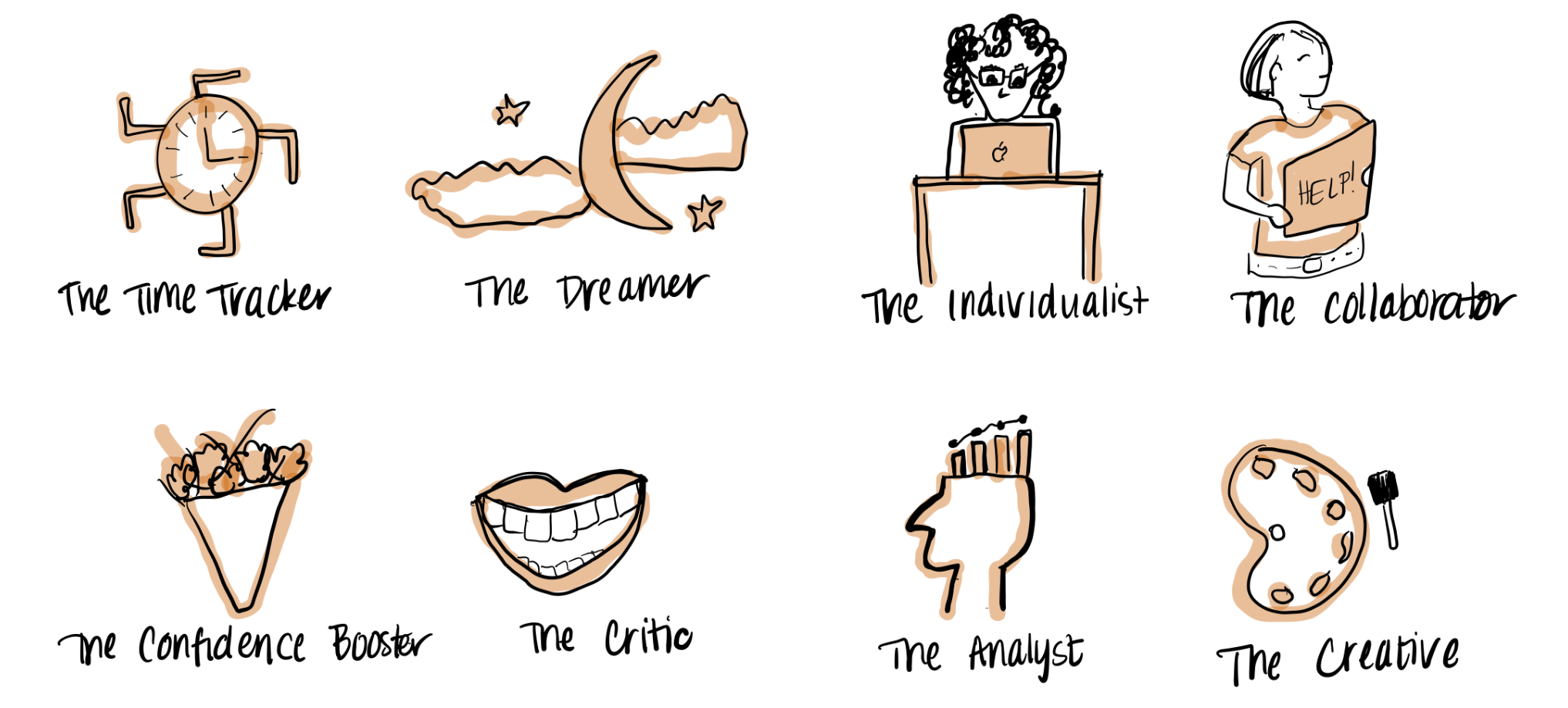
When these parts are especially loud or in conflict with each other, this is a predominant reason you find yourself stuck, procrastinating, overwhelmed, or burnt-out.
This was exactly the case for Gustavo, a Director of Product who came to me saying, “I’m dropping balls left and right. I need help with time management and prioritization.” He could rattle off every productivity tool and how he was using them, but he was still ineffective at getting through his big weekly tasks.
As we dug deeper, it became clear that one part of him (the same part that brought the topic to the coaching session) wanted better time management skills. But another part of him couldn’t fathom disappointing anyone and was busy building up an infinite, never-ending list of work by constantly saying yes. A third part of him was so ashamed of and exhausted by the constant battle between these two other parts that it was nudging Gustavo to give up on the job entirely and quit.
Coaching Gustavo to prioritize one big thing each day or turn on DND mode at work did not solve his stuckness, because the core issue was not time management. It was an internal conflict that’s unsolvable by external productivity tools.
What did work was helping him uncover and address his seemingly irreconcilable feelings, needs, and fears—the voices of his many different parts that were wreaking havoc on his productivity and mental health.
If you relate to Gustavo, please know that it doesn’t have to be this way.
Internal Family Systems (IFS) is a powerful method for uncovering and relating to different parts of ourselves (especially the ones in conflict with each other) and developing a more integrated, aligned, and collaborative self. Though developed in the context of personal therapy, it is a highly effective tool for navigating the workplace, too.
Taking on a new project, negotiating your salary, handling a new promotion, delivering constructive feedback—these topics all tend to trigger inner conflict for most of us. IFS can help us turn toward that tension constructively so we can build the clarity and courage required for the next evolution of our professional development.
That’s how it worked for Gustavo, who said: “I realized that it’s not about time management. The thing I’m actually working on is building my own tolerance of chaos at work. It’s about feeling less out of control and recognizing when I’m spiraling into unnecessary anxiety, so I can work with and comfort those parts of me. I think I was actually causing more chaos for myself and my team by sort of pretending that things weren’t chaotic and trying to keep it all together. Now I’m more focused on recognizing the chaos without it totally taking over the rest of my day.”
In this piece, I’ll guide you through the same process I used with Gustavo to identify your parts and navigate the inner conflict that leaves you overwhelmed. You’ll learn how to notice and listen more effectively to the competing voices within you and then facilitate a more effective dialogue between different parts of you so you can break through stuckness, get on with your day, and learn to care for (rather than bully) yourself more in the process.
A brief primer on Internal Family Systems
Imagine you’re driving a bus. But it’s not just you in the vehicle—the bus is filled with different parts of yourself, each with its own perspective, needs, and fears. Some are shouting directions, others are arguing about the route, one is perfectly relaxed and chilled out, and a few are observing from the back, scared the chaos is never going to end. Frequently, one part runs up to grab the wheel and steer you in an unexpected direction. Soon, another part follows and shifts your course again.
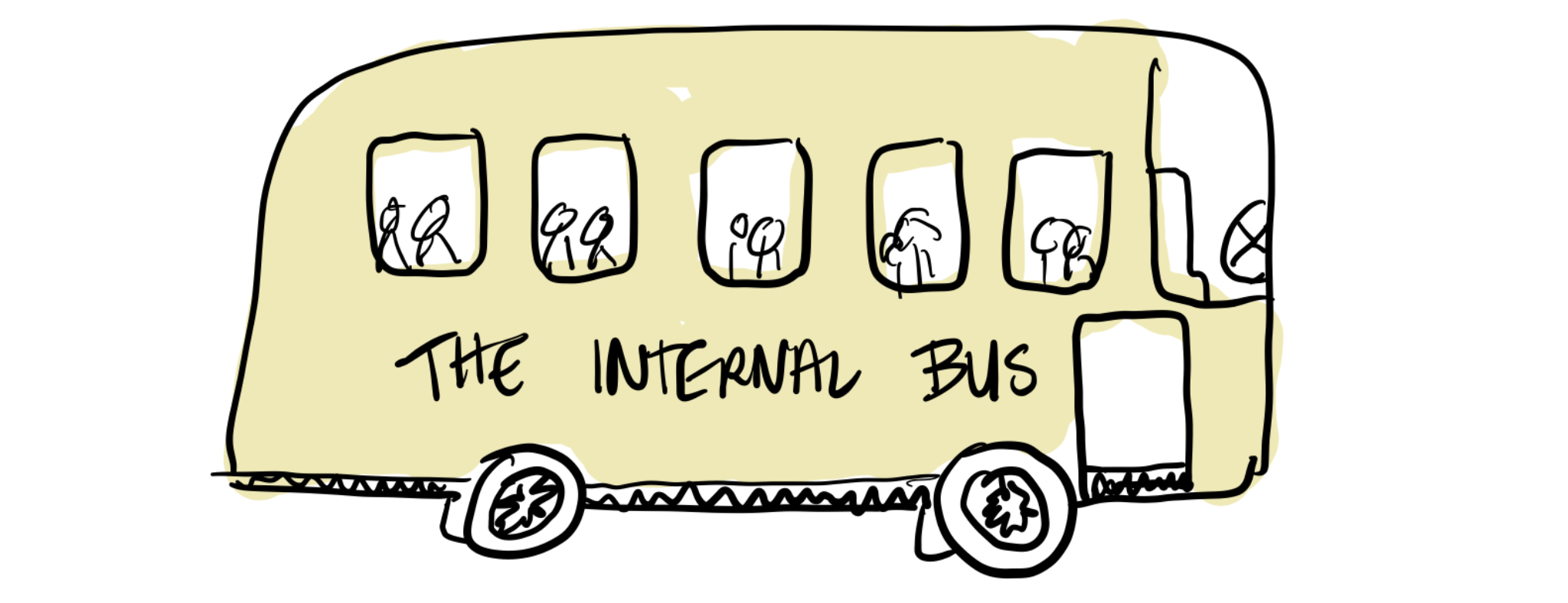
This is the first key principle I want to highlight from the IFS model: we all have many parts.We are not just one monolithic self that’s the same in every context or has a fixed personality.
If you listen to all the parts on the bus at once, it can sound like total mayhem and chaos. But when we take time to be with and listen to each part, one by one, we learn a second key principle of IFS: all parts have positive intentions, hope, and wisdom for us (including the parts that like to procrastinate or criticize us!).
Let’s bring this to life with a personal example. As I sit down to draft this article, I’m aware of a variety of different parts on my bus.
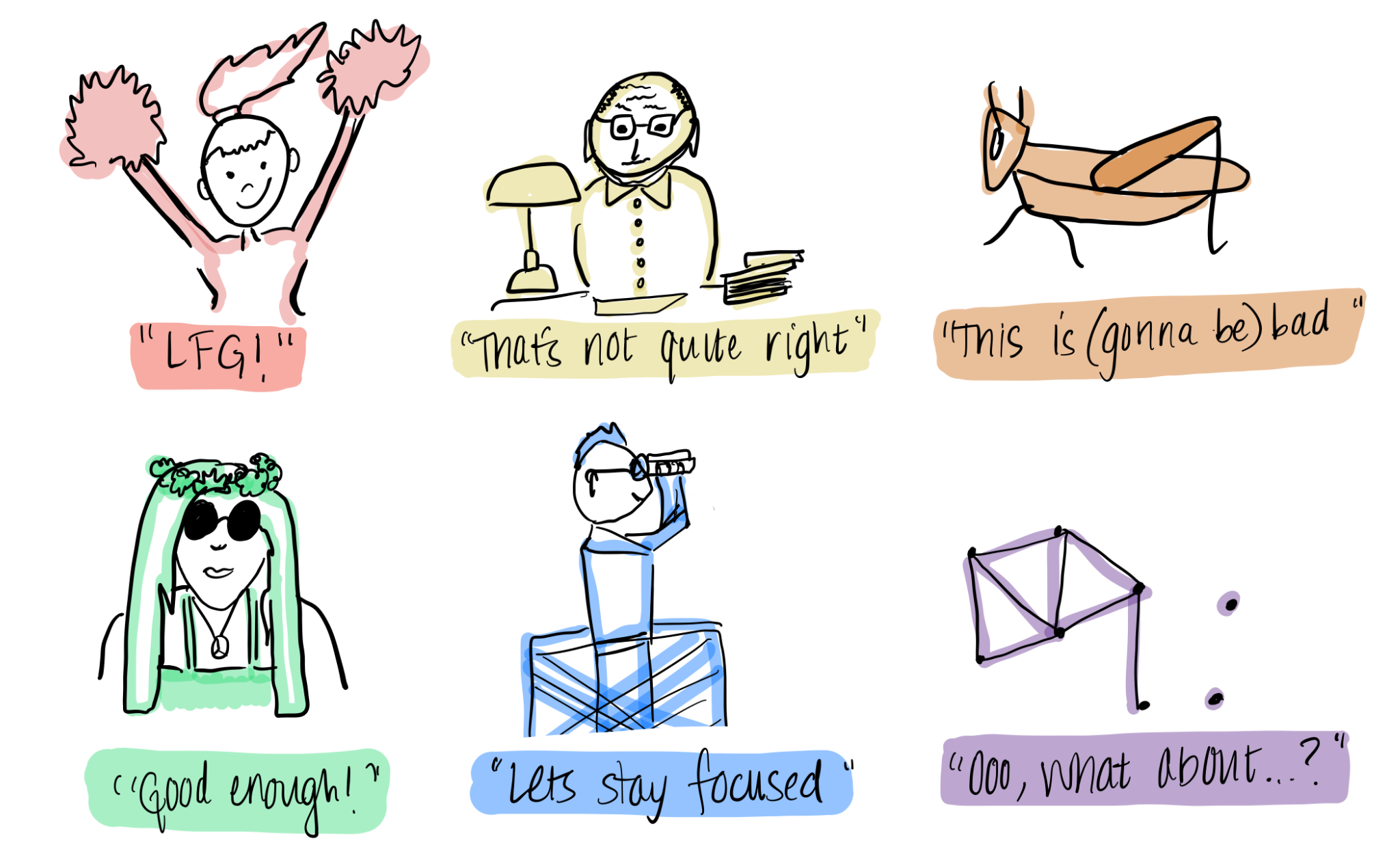
One part is hopeful and excited. She takes the form of an inner cheerleader. I sense her in my torso nudging me forward with momentum. This part knows firsthand about the power of IFS and has seen hundreds of examples of it meaningfully impacting people’s sense of agency and fulfillment at work. This part hopes I can convey information well so that others may benefit from this powerful tool. Her motto is “LFG!”
One part wants the article to be perfect and artful. This part is like an old-man librarian, fastidiously hovering above a desk. He is primarily concerned about quality and things being just right, and demands that I capture nuance well. His motto is “That’s not quite right.” This part keeps me working long and hard on the perfect sentence.
One part is nervous and anxious. This part takes the form of a cricket, making loud noises and alerting me that something may go wrong, or that I won’t be effective at explaining this concept. It worries that I will fall flat, embarrass myself, or sound incompetent, so it ensures I do everything possible to avoid that. Its motto is “This is (going to be) bad.”
One part is concerned with having fun. This part is kind of a hippie, and likes to frolic and play and not worry too much about work. Her intention is to ensure I don’t spend my entire life working tirelessly without enjoying myself, and has a motto of “Good enough!” (She’s often in conflict with the old-man librarian, which leaves me both paralyzed and overwhelmed.)
One part is focused, assessing and tracking. This part sees the big picture and knows what’s missing, while also monitoring and assessing my progress at all times. His intention is to ensure the project gets done on time and to expectation, and his motto is “Let’s stay focused.”
One part is creative, and excellent at connecting dots. This part reminds me of all the relevant examples that might be included in the piece and offers me lots of metaphors to try to convey the message more meaningfully. Her hope is that things feel right and coherent, and her motto is “Ooo, what about if [new idea here]?”
As you can see, it’s quite loud in here!
When I sit down to write, the biggest productivity battle is actually an inner conflict between the old-man librarian (who wants things to be perfect), the anxious one (who thinks I’m going to fail or embarrass myself), and the free-spirit hippie (who likes prioritizing play over work, so would rather I not write at all). Then there’s the one trying to keep me on track and noticing whenever I get even slightly behind schedule.
These parts get very loud whenever I try something new or risky. The tension between these parts means that I spend a lot of time trying to write but instead end up procrastinating by doing unnecessary research, convincing myself I’m hungry, or opening up WhatsApp to chat with friends instead. This doesn’t feel good, and it doesn’t actually satisfy any of my parts. My ability to relate to them well (and integrate them rather than have them take over driving the bus) is the biggest determining factor of a productive writing day.
This is a third key principle of IFS: We all have a Self that can help us relate to and integrate the various parts on the bus. Ideally, this wise inner Self is firmly in the driver’s seat most of the time. This is critically important. We move through inner conflict by effectively facilitating dialogue, which requires a calm, safe, and compassionate presence available to all of us. That’s where we’re headed in the rest of the article.
Now that we’ve got a sense of some basic principles of parts, we can start to make progress on any inner conflict that’s leaving us stuck or overwhelmed.
I know it can be hard to apply some of these concepts just from an article. To bring this process to life, Lenny and I recorded a small session to give you a sense of what the exploration can sound and feel like. I’ve included snippets of each step below, but know that getting through even just step 1 or 2 can provide great relief.
First, let’s meet and get to know our parts.
Step 1: Sense and name the competing parts
Your parts are at play all day, so it doesn’t have to be a radical, huge conflict to recognize them more formally. Bring a challenge to mind and inquire how you’re feeling about it, and you’re likely to experience different parts of you reacting to that challenge.
Here’s an example that will resonate with any startup operator:
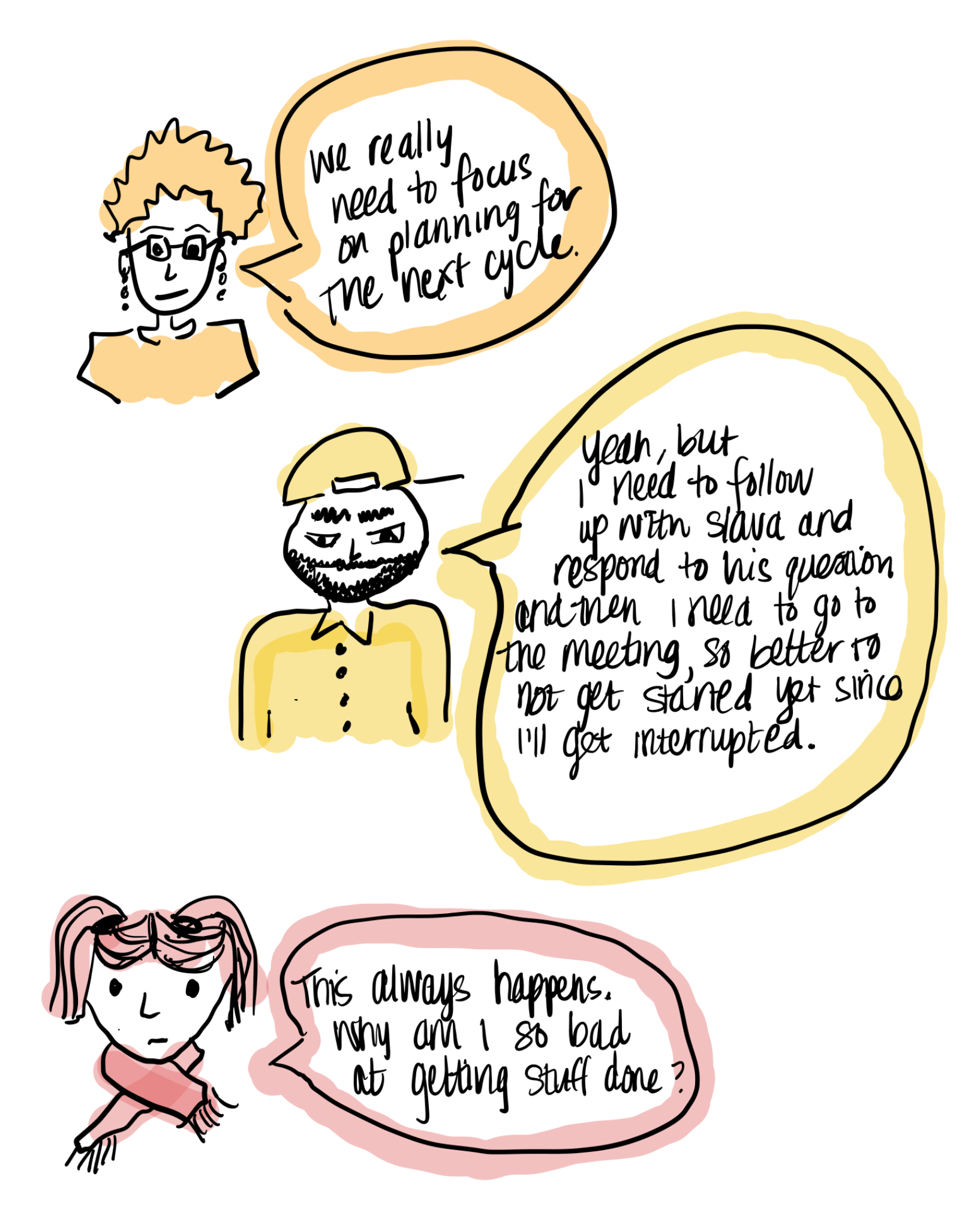
One part tries to help you focus on the big picture, and another part reminds you of all the small things you need to get to and the meeting you have in five minutes that you still haven’t prepared for. Observing this tension, a third part comes in and reminds you that you’re bad at getting stuff done and questions why it’s always so hard to be productive.
The dialogue continues, and pretty soon the tension grows such that each part takes on an even more extreme version of their role.
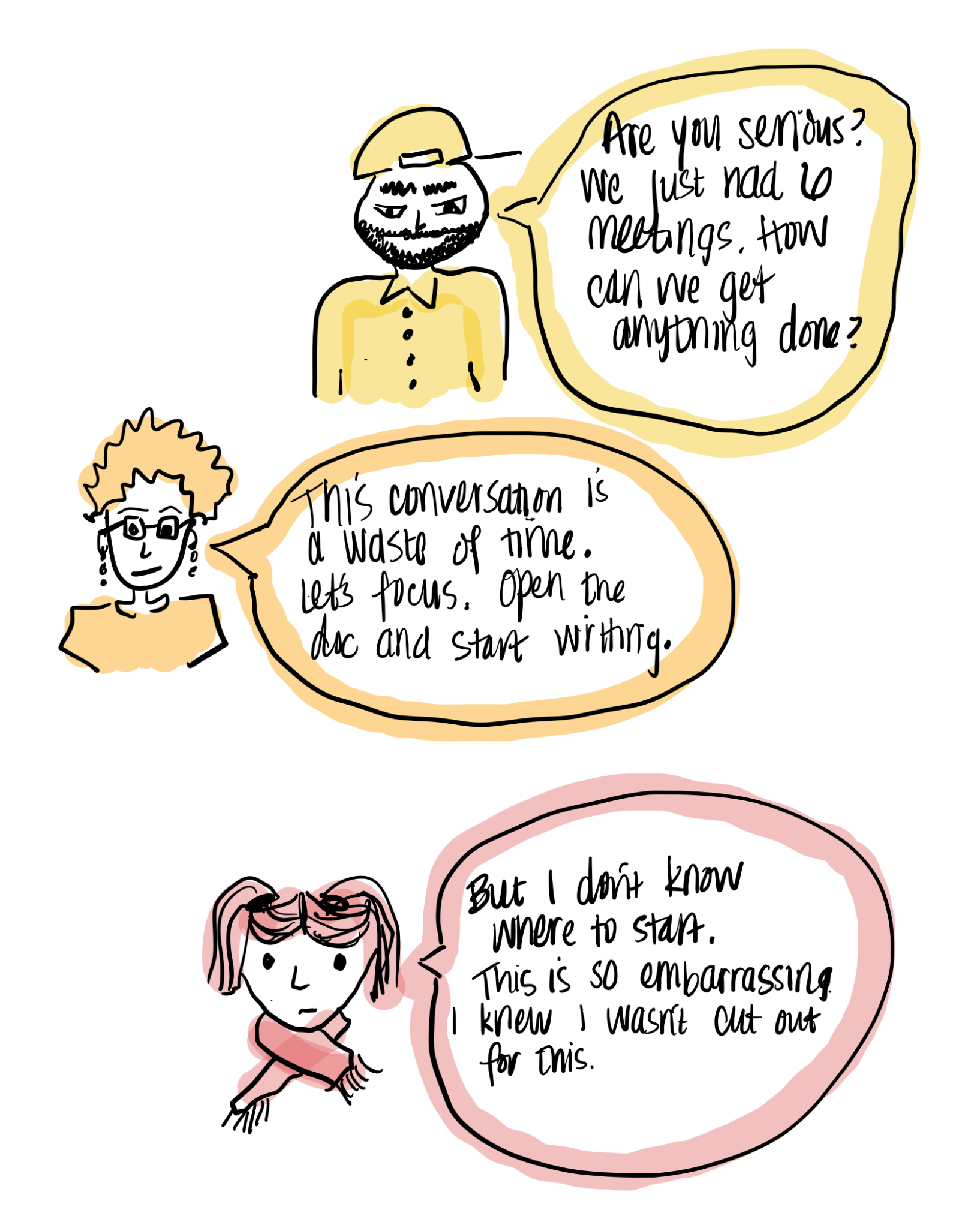
Sound familiar? It’s common, it’s normal, and it’s exhausting. Every one of us has these internal dialogues, and they can get especially loud when we’re stressed, overwhelmed, or feeling any personal threat (aka: startups).
I have clients visualize the conflict as one part on the bus grabbing the steering wheel and driving in one direction, only for a different part to grab the wheel moments later and take a completely different route. Back and forth, over and over again, and the bus goes nowhere.
Acknowledging what parts are at play and naming the conflict alone can be transformative. When we see the tension clearly, that can sometimes be enough to dissipate it.
This process of sensing your parts can be quite simple. Let’s look at how Lenny does it in this first clip.
When imagining the upcoming Lenny and Friends Summit, he quickly notices three different parts that show up in anticipation of the event.
Here are some tools to sense your own parts:
- Notice what’s happening in your body. Parts can reveal themselves as thoughts, images, words, visuals, sensations, and emotions.
- Slow down so you can track what’s happening. Fast thinkers, especially, tend to go quickly over their own experience. Try to stay with it for a bit longer.
- Imagine giving voice or a microphone to different sensations as you feel them. If this sensation had words, what would it say?
- You might also ask yourself how you feel about a part that comes up. We’re looking for an open, compassionate heart. If you feel frustrated, annoyed, or judgmental . . . chances are you’ve found a different part that’s in some tension with the first.
Step 2: Validate that each part of you is valuable and wise
If you grew up in a house with siblings, you know that favoring one kid usually doesn’t end well. Yet most of us tend to favor one part of ourselves and shove the others to the side. That impulse is often driven by shame, guilt, or embarrassment.
Gustavo wanted to see himself as someone who got stuff done, so he sided with the part of himself that confirmed that identity (the time management one) and pushed away any part of him that wanted to prioritize rest or work-life balance (like the exhausted one). He (really, another part of him) judged those parts as unproductive and shameful.
But the parts that we judge, shame, or ignore actually tend to get louder and more extreme as we try to ignore them. The goal is to recognize each part as equally valuable, wise, and worthy of listening to. It’s a powerful healing experience to actually have our own experiences validated. This alone can create a shift and more ease without having to do or change anything. Once our parts feel heard, they are usually flexible and trusting of an adult in the room (you) to make decisions on their behalf.
At this step, I tell my clients to bring the conflict to life using names or identities where resonant—as I did for the parts of me writing this post. For example:
- “The ambitious part of me wants to take on more work. The balance part of me wants to prioritize rest and relaxation.”
- “One part of me wants to make a strong and bold decision. Another part of me feels insecure about the decision and is scared I’m messing it up.”
- “The warrior in me thinks I should give this feedback now while it’s fresh. The janitor in me doesn’t want to cause drama and experience discomfort so would rather sweep it under the rug.”
Then notice if there’s one you favor, or one that usually “wins.” You can do this by imagining which voice on the bus is louder, or by having each part sit in your hand while you assess their relative weight. These are techniques for recognizing the polarization itself. What’s important is to feel it, rather than just intellectually understand it.
In this next clip, watch how Lenny beautifully tracks the internal conflict as I mention there may be validity and wisdom to his fear. During this process, we’re shifting from a part that wants to fix and squash his fear to a more compassionate place of trying to validate and understand how the fear helps him.
Step 3: Pull the bus over and listen
When we work on inner conflict, the goal is not to override one side or let anyone “win” but instead to facilitate better ongoing internal collaboration so that they can work together on the same team. To do so, we need to listen to both sides.
In IFS, we call this process “unblending.” In our bus metaphor, unblending is like saying, “Hey, part, I need you to step away from the steering wheel so we can pull the bus over and I can first understand where you want to go and why.”
We do this with all parts involved in the internal conflict. I have my clients interview (not interrogate) the parts with an imaginary microphone and really get the full download. This can feel silly if you’ve never done it before, but it’s surprisingly powerful because many of these parts have never received undivided attention and curiosity.
As you interview and listen to each part to understand its feelings, needs, and fears, it’s very common for another part on the bus to suddenly come in, grab the steering wheel and give you contrary evidence that proves, criticizes, or distracts.
When this happens, imagine pulling the bus over again. We’re not driving anywhere else until we understand and listen to where everyone wants to go, but we have to do that one part a time.
Interview as many of the parts as need to be heard in the inner conflict. These parts are trying to protect or serve you in some way—even your inner critic!—and your goal is to help them feel known and understood in their efforts. Often these parts will share fundamental concerns (even if they respond to those concerns in opposite ways).
Let’s see how Lenny does this with the part of him that’s scared about the Summit, and the part that motivates and pumps him up to do a good job.
You’ll notice how the different parts express themselves through Lenny’s body. The fear part is quieter and speaks more slowly (3:40). The excited part speaks fast and moves quickly and animates Lenny fully (8:50).
The goal of this step is to really allow the parts to show you who they are and to feel understood by you.
Here are some starter questions to begin the conversation with your parts:
- How are you trying to help me?
- What’s so important about that?
- If you didn’t do that role, what are you worried about happening?
Repeat back what you’re hearing and check to see if they feel heard, or if there’s something more, before moving on to the next part.
- It sounds like your role is [x], and you feel like you have to do that in order for [y bad thing] to not happen. Is that right?
- Is there more you want me to know?
Here’s another real-life example to illustrate the end state of this step.
My client Rebecca was offered a promotion to a COO role that she’d been working toward for years but was somehow paralyzed and unable to accept. As a new mom, she found herself strapped for time and wanting to prioritize different aspects of her life.
We started to disambiguate the internal conflict and listen to the various parts involved in the decision.
An ambitious part is really excited for the promotion. It sees the opportunity for growth, increased influence, and the chance to make a career-level impact. It worries that if she doesn’t take the role, there won’t be another obvious opportunity like this in the next several years unless she moves companies.
A cautious and skeptical part is worried about the increased responsibility. It fears that she might not be ready for the role and could fail spectacularly, damaging her reputation and self-confidence. Rebecca had pushed this part away because it felt weak and shameful.
A part that advocates for more balance in her life is concerned about the longer hours and increased stress that might come from the new position, especially as a new mom.
A loyal part feels guilty for leaving her direct team and is worried they’ll feel disappointed by her decision if she accepts. Rebecca was familiar with this part but realized it wasn’t as loud or forceful as she had anticipated.
Once Rebecca could see all the parts on the bus, that already unlocked a ton of emotional energy. There was so much going on inside her, no wonder she was stuck! It’s common at this point for people to want to fast-track to solutions, but the trick is to not try to resolve the conflict as a third party. Instead, Rebecca needed to create the environment for the parts to have a conversation with one another.
Step 4: Facilitate internal dialogue and problem-solving
Once the parts feel heard by you, have them speak to each other. Yes, we want to get unstuck, and this step of the process is about building internal relationships rather than enabling growing factions.
Imagine them sitting on the same bus seat or in a circle, facing one another. Tell them the goals: you want them to understand where the other is coming from, and recognize the ways that they’re on the same team.
The rules of the game are: no disrespecting each other, no debating who is right or wrong, no persuading of the truth. These parts often have black-and-white thinking and have never seen good examples of connection across differences.
Here are some facilitation tips:
- Help the parts recognize shared goals or values. In Rebecca’s case, all parts want her to feel successful and fulfilled in her career.
- Encourage non-zero-sum problem-solving. Invite them to collaborate on solutions that address multiple concerns. For instance, Rebecca’s parts thought about negotiating a phased transition into the COO role, allowing her to gradually increase her responsibilities while ensuring that her current team felt well supported.
- Practice self-compassion. Don’t beat yourself up about the conflict. All the parts of yourself are super-smart and, when given space, come up with creative ways to support each other, so you don’t need to force solutions.
Again, the goal here isn’t to silence any part or to force a compromise. Instead, it’s to create an internal environment where all parts feel heard and valued, and where they can work together toward common goals.
In this clip, I ask Lenny to begin to facilitate this internal dialogue by having each part hear the other. Even in just a few moments, you can get glimmers that both parts are invested in the Summit being very high-quality (even though they ensure that in completely different ways).
Step 5: Decide on and commit to the destination and the route
Often, steps 1 through 4 are enough to provide clarity or relief. Sometimes, though, inner conflict shows when there’s an important decision or commitment to make. In those cases, the goal is to incorporate the wisdom of all the parts rather than ignoring or overriding some voices.
This is no different than effectively leading an external team at work through a decision. Gather input from all the stakeholders (your parts), synthesize them from a place of clarity, make the call, and then inform everyone about the decision.
In this last clip, you’ll notice Lenny beginning to integrate the needs of the fearful part into his plans for the Summit. Notice the specificity of its requests, which are simple, clear, and totally reasonable. If we invalidate or avoid the fear, we also miss out on the gifts and wisdom that part brings us.
To do this yourself:
- Imagine the different parts of you sitting around a table. One by one, ask each part: “What do you need from me or any of these other parts in order to make decision [x]?”
- Once you’ve gathered the data and heard from all parts, make a decision. You already know how to do this if you’re a product manager. Gather input, and then make a call.
- Follow up with your parts on the decision. Some parts of you may not be happy with your decision and may feel betrayed, anxious, or even angry. It can help to clarify how you made the decision and why you made it. Again, this is just like working with an external team at work: don’t burn people by asking for input and then never following up about your decision. Don’t do that with your internal team either.
Here’s how this looked for Rebecca. She realized that she could accept the promotion while also negotiating for support in areas where she felt less confident. She committed to maintaining her existing boundaries to protect time with her new baby and created a transition plan to ensure that her current team felt well supported. Rather than framing the question as “Should I take this promotion?” she shifted it to “What do I need in order to feel more confident and clear about saying yes?” All the voices got on board.
Applying parts-work at work
Getting to know your parts is powerful for a wide range of issues at work, because workplaces are hotbeds of performance stress and anxiety.
If you’re anxious about hitting your goals and worried about work outcomes, it’s likely that a part of you is scared and could use some attention and comfort.
If you’re struggling to make decisions effectively, that’s usually a sign of an inner conflict of parts that want to make decisions from different criteria (e.g. one part wants to maintain connection with others first and foremost, and another part wants to avoid failure regardless of the impact on others).
If your mind is totally cluttered and overwhelmed with tasks, you may have a lot of chaos on your bus that’s worth taking a moment to hear out and sort through.
If you spend most of your time navigating alignment friction, you may have a lack of tolerance of external conflict. Parts of you may be overly concerned with making people happy versus building the right product.
Think about your current challenge at work, and investigate what parts of you are at play. You may be surprised to find a hidden inner conflict that makes it hard to mobilize with clarity.
Tying it together
The process of working with inner conflict is repeatable across many scenarios where the problem is rarely solved with a pro/con list. But it requires a willingness to start looking inside yourself when you’re stuck, rather than outside.
When we practice hearing the inner polarization and facilitating dialogue among our parts, there are two added benefits.
First, we’re building internal capacity. It’s not just a one-time process for decision-making but rather the development of a more integrated way of navigating complexity. Gustavo and Rebecca are learning how to draw on the wisdom of all of their internal parts regularly, leading to more confident decision-making and less internal thrash and anxiety.
Second, we build capacity and tolerance for conflict in our external worlds too. You’ll develop significantly more empathy and a stronger radar for team polarization, noticing when your colleagues or reports are voicing concerns from different “parts.” You will be able to create more space for all voices and encourage team members to express their perspectives without judgment. And when disagreements naturally arise, you’ll have more tolerance and skill in facilitating productive dialogue rather than letting things overheat or trying to cool the room down prematurely (which will only lead to it getting hotter again later). This kind of tolerance and comfort with facilitation through conflict is actually an enormously useful leadership muscle to develop—the kind of skill that Gustavo and Rebecca need to take their careers to the next level.
Remember, inner conflict is not a flaw or a weakness. It’s a natural part of our experience of navigating ambiguity and complexity, and it comes with the territory of leading others. The key is to learn to navigate those conflicts with compassion and clarity, and to treat it as an ongoing practice.
📚 Further study
- Jay Earley’s description of the seven types of inner critics
- No Bad Parts by Richard Schwartz
Thanks, Natalie! For more from Natalie, check out The Ripple Deck and follow her on LinkedIn and X.
Have a fulfilling and productive week 🙏
Hiring? 👀
I’ve got a white-glove recruiting service specializing in senior product roles (e.g. Directors, VPs, and Heads of Product), where I work with a few select companies to fill their open roles. If you’re hiring, apply to work with us below.
If you’re finding this newsletter valuable, share it with a friend, and consider subscribing if you haven’t already. There are group discounts, gift options, and referral bonuses available.
Sincerely,
Lenny 👋