P.S. Don’t miss Lennybot (an AI chatbot trained on my newsletter posts, podcast interviews, and more), my PM recruiting service (helping you hire Sr. PMs and VPs), and my swag store**(great gifts for your favorite PM, or yourself!).
Q: How do I hit #1 on Product Hunt?
Product Hunt is one of the most effective ways to get early users for a product. It’s free, available to everyone, and if you can pull off a great launch, Product Hunt can change your startup’s growth trajectory. Companies like Notion, Loom, Zapier, Robinhood, and Front all found their first set of users this way. However, the little-known truth is that of the thousands of startup founders who try their hand at Product Hunt each week, very few see any impact. For many, it proves to be a big waste of time.
Over the past few months, I’ve been polling startups that have done well on PH about their secret to winning. One name kept coming up: Leo Bosuener. Leo stays relatively under the radar (he doesn’t have a LinkedIn or Twitter profile), but his company Social Growth Labs has helped more than 60 startups hit #1 on Product Hunt, and over 100 startups hit the top 3. I didn’t know this initially, but he’s helped five of my portfolio companies alone (includingArcade, Daydream, and Mage) hit #1.
I asked Leo if he’d be up for sharing his best advice, and I’m so happy he agreed. Below, Leo shares the seven things you need to get right to win on Product Hunt, and five myths. This is the most actionable and high-signal-to-noise guide for successfully launching on Product Hunt you’ll find. I know many guides exist, but until this post, I’ve never had one definitive guide to share with people that doesn’t also overwhelm them.
I ran this guide by Rajiv Ayyangar (CEO of Product Hunt), asking him what’s missing or wrong about this advice, and his response was, “This is honestly really great.” Rajiv went further and shared a few bonus pro tips that we’ve integrated throughout the post.
A huge thank-you to Leo for sharing his hard-earned wisdom. If you want to chat with Leo about your launch, learn more about his service here, and grab a time to chat with him here. When working with Leo’s team, the launch preparations will take on average around 10 hours, versus 50 to 120 hours when managing the campaign entirely in-house.
It’s tempting to see Product Hunt as the golden ticket to startup fame. Many founders we talk to expect a PH launch to cause their servers to buckle under a tsunami of traffic, venture capitalists to queue up with checks, and instant startup stardom to be theirs—all before their morning coffee even cools down. But the truth is, launching on Product Hunt is not for everyone. Every week our agency receives a dozen requests from founders looking for help launching on Product Hunt, and we convince 70% of them that they aren’t ready. So before I get into how to win on Product Hunt, I’ll first try to convince you that Product Hunt might not be the best use of your time right now.
The hard truth about Product Hunt launches
On average, startups that do well on PH invest 50 to 120 hours preparing for launch. Though some startups hit #1 investing very little time, your odds go up significantly if you put in the time. The number of hours required to prepare for a successful campaign varies based on the stage of your product, your experience with PH, and who your users are (i.e. B2B versus B2C). And as Rajiv shared with me, “Founders often launch too late. Most founders I know recommend launching early and often. Product Hunt is a powerful signal on what the market wants, and it’s worth finding that out as soon as possible.”
Still, there are also hundreds of startups that launch on Product Hunt each week and see no impact. Why? A mix of reasons: lack of preparation, audience mismatch, or just bad timing, with too much competition on your chosen launch day.
With such a large investment of time and team hours, you need to ask yourself—are there better ways you could be using your time? Especially if you’re looking for a sustained increase in signups or launching your product for the first time, paid ad campaigns are often a more efficient way to test initial messaging or scale your marketing efforts sustainably.
All that being said, for the right product, with a well-executed launch, the impact can be game-changing.
A few startups that have shared their metrics publicly include Twinr, a no-code mobile app builder that won Product of the Day. Twinr received 1,000 signups on launch day and has continued to get 150 signups per day since. Wide-appeal B2C launches such as newsletters or productivity tools can result in upward of 3,000 signups. Another prominent example is Air. Their team saw web traffic increase 5x, single-day account creation go up by 8x, and single-day workspace creation increase by 10x. The launch day was also their best day of organic sales leads ever.
Product Hunt is a playground for brand awareness, credibility, and social proof among early adopters and tech enthusiasts. It’s a sweet spot for startups that want to:
- Catch the eye of tech bloggers, influencers, or investors to raise their next round
- Drive a short-term growth boost
- Receive genuine user feedback from tech enthusiasts
- Leverage SEO juice from backlink from a high-authority domain like Product Hunt
On that last point, a valuable long-tail effect of launching on Product Hunt is the SEO benefit you can reap from landing a high-authority backlink. Especially for brand-new startups that haven’t focused on their SEO strategy yet, this can make a big difference.
Finally, B2C products often see more signups than B2B products, thanks to a broader target market. The average B2B startup might get 50 to 300 signups and consider it a great success, whereas B2C productivity tools can get 500 to 1,500 signups on average.
Tip: If you’re launching a B2B product, you need a smooth, self-serve onboarding flow to make the most of a Product Hunt launch. Product Hunt users are early adopters who love to dive in and explore right away. Delayed access? You’ve lost them.
The insider’s guide to winning Product Hunt
So you’ve weighed the pros and cons and decided to go for it. Here are 7 tips that will help you crush your campaign and 5 common myths about Product Hunt that’ll save you a lot of time.
1. Set the right goals: aim for conversion over popularity
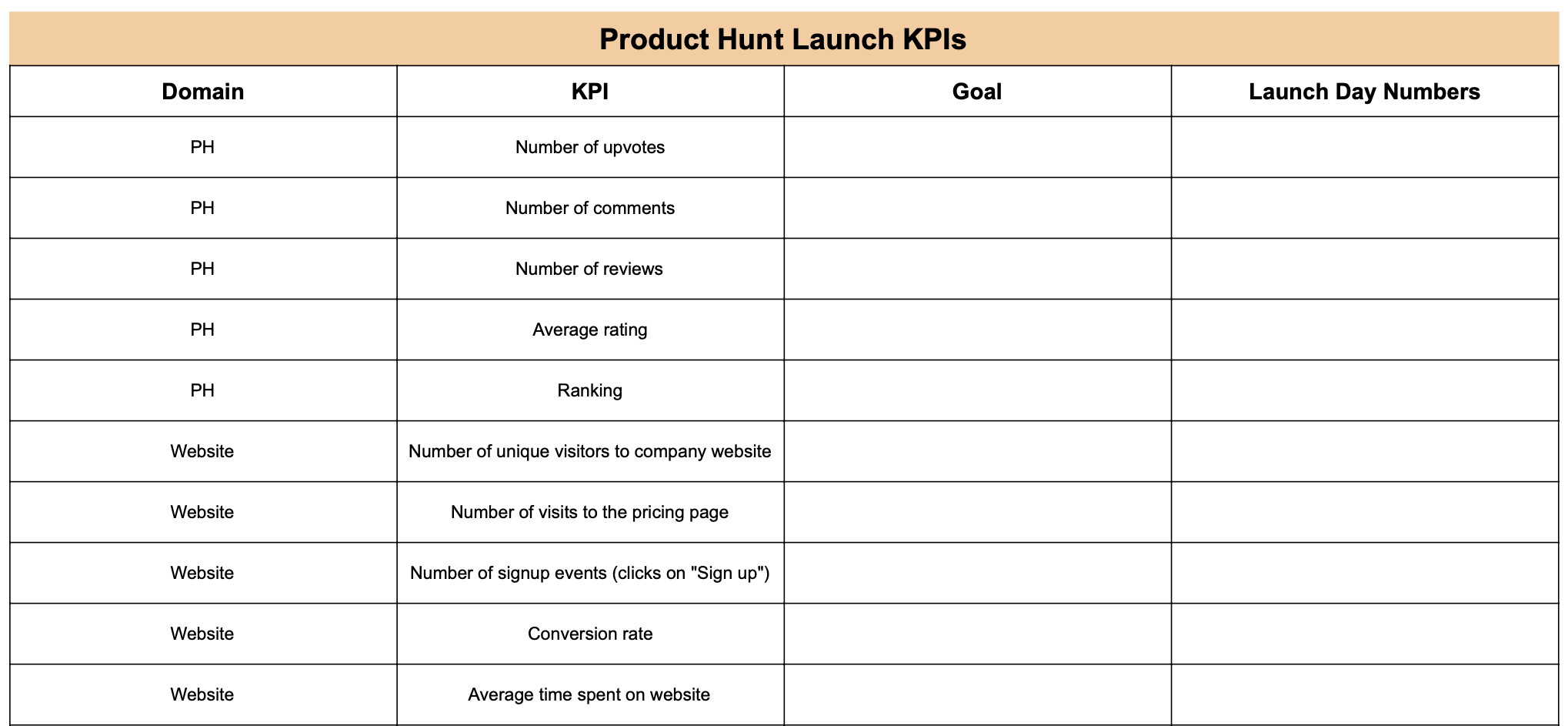
First things first—set a conversion goal for your product. It’s great to aim for the top spot on Product Hunt, but what actually matters are your business KPIs: website visits, new signups, and trial conversions to paid. These are the metrics that will truly drive your growth. You can use this template to decide on what metrics you are optimizing for.
2. Warm up your audience: start 30 days before launch
Imagine throwing a party and not telling anyone until the day of. That’s what it’s like to launch on Product Hunt without warming up your audience. Start building buzz 30 days in advance of your planned launch. This isn’t just about letting your close circle know—it’s about strategically seeding your launch with people who can amplify your reach.
High-level, here’s what you need to be doing weeks before launch:
- Build anticipation: Let your community know you’ll be launching on Product Hunt. Plant a seed that you’ll ask for their help later.
- Account creation: Encourage your network to create a Product Hunt account 30 days prior to your launch date (if they haven’t already). The Product Hunt community (and algorithm) values engagement from seasoned members more than newcomers.
- High-value-user engagement: Focus on engaging users who are active on Product Hunt and have a significant following. Their support can be pivotal. More on this in the following sections.
- Global strategy: Leverage time zones to your advantage. You’ll want users in as many time zones as possible, to spread votes throughout the 24-hour period. Much more on this in the section below.
- Maker Network: Engage with the community well before your launch. If you are active on Product Hunt in the weeks leading up to your launch and support other makers throughout their launches with meaningful feedback and comments, they are often more than happy to reciprocate the favor and support your launch in turn. Users who have recently launched on Product Hunt have much better response rates than those makers who last posted anything two years ago.
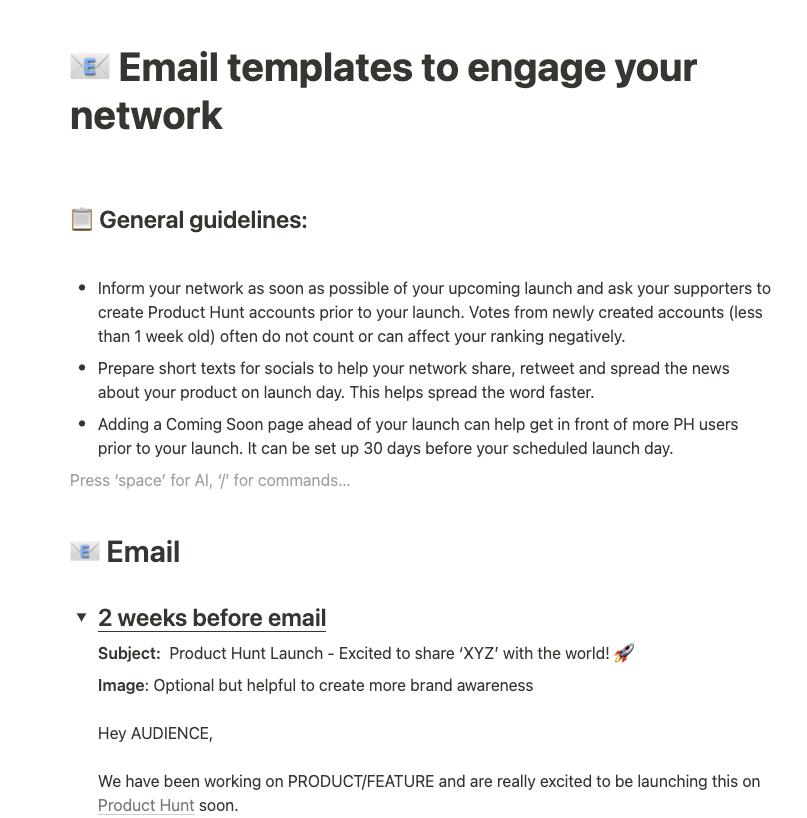
Here’s a template I use with my clients to help them craft these early outreach messages.
Remember to focus on connecting with users within your ideal customer profile (ICP). For example, if you already know that your product is particularly popular among product managers, seek these people out on Product Hunt and connect with them on LinkedIn. This will help you not only get your product in front of the general Product Hunt crowd (startup founders, developers, product marketers, and investors) but will increase your outreach conversion rate, as you have tailored it to those Product Hunt users for whom your product is most useful.
What happens if you fail to warm up your audience in advance:
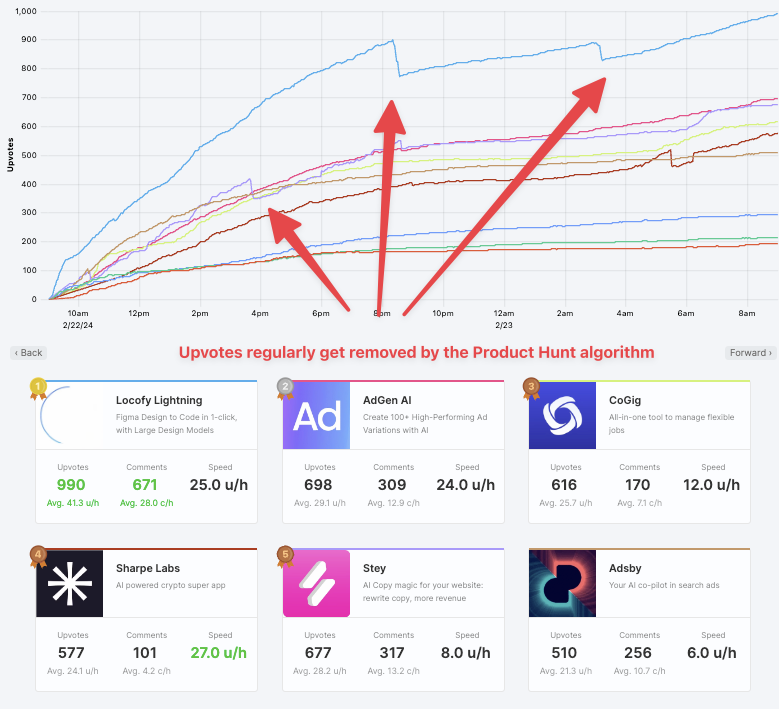
If your supporters have not signed up to Product Hunt in advance and they create brand-new accounts on launch day to upvote, there is a high likelihood that these votes end up being removed by the Product Hunt algorithm.
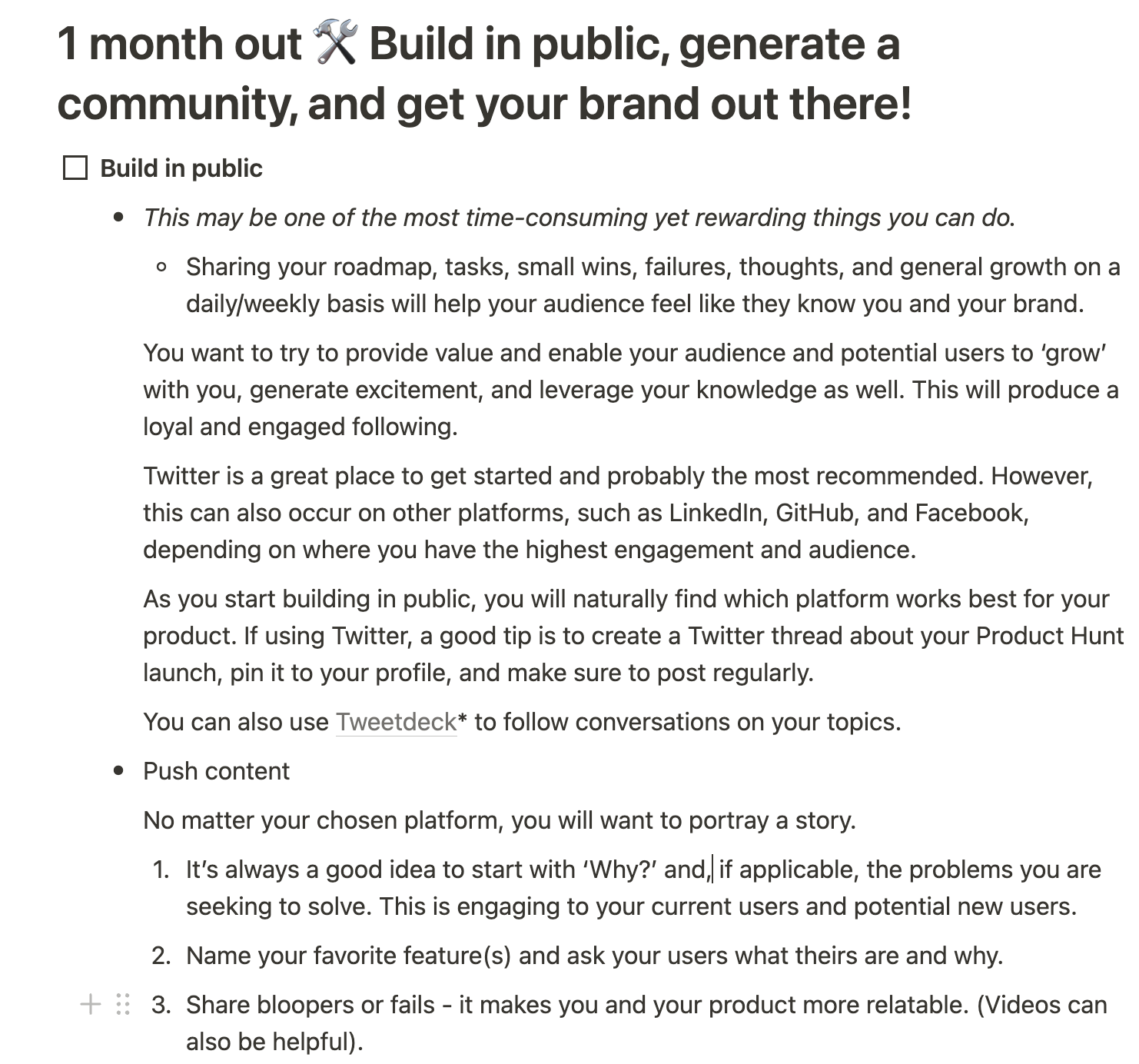
For a full launch preparation agenda, see our Notion template here.
3. Be strategic about launch day: consider time zones and day-of logistics
Once you start preparing for your launch, your existing network can be your biggest asset during the launch, but you need to plan wisely to mobilize your community most effectively.
1. Use time zones to your advantage
One of the most overlooked strategies is playing the time-zone game to your advantage. Spreading your votes throughout the day is crucial, as is launching at 12:01 a.m. Pacific Time. Product Hunt’s algorithm favors products that maintain a steady stream of engagement. Here’s a strategy to maximize your visibility:
- Segment your outreach: Plan at least three major pushes throughout the day to ensure a consistent flow of upvotes—ideally, at 12:01 a.m. PT to announce your launch, at 7 a.m. PT when U.S. users come online, and at 2 p.m. PT to maintain momentum throughout the afternoon.
- Email drips: If you have a sizable email list, segment it even further. Schedule up to 10 email blasts throughout the day (by time zone if possible, to make sure people are awake). This ensures that your network is engaged and ready to support you at the right time.
- Engage your entire network: Don’t leave anyone out. From employees to users and investors, encourage everyone in your circle to participate. Remember, engagement from long-standing Product Hunt accounts is more valuable than a sudden influx of new accounts.
- Staggered engagement on your social channels: Schedule your social channels as well. Similar to the above, aim for a rollout in waves, following the sun around the globe. This ensures a steady stream of engagement rather than a one-time spike.
- Local influencers: Identify key influencers in different time zones and get them on board early. Their engagement can trigger others to follow suit.
2. Launch-day logistics
As D-Day approaches, make sure you have a detailed plan for what you’re going to do throughout the day. Here’s a template to create your launch-day war plan and assign tasks to your team members.
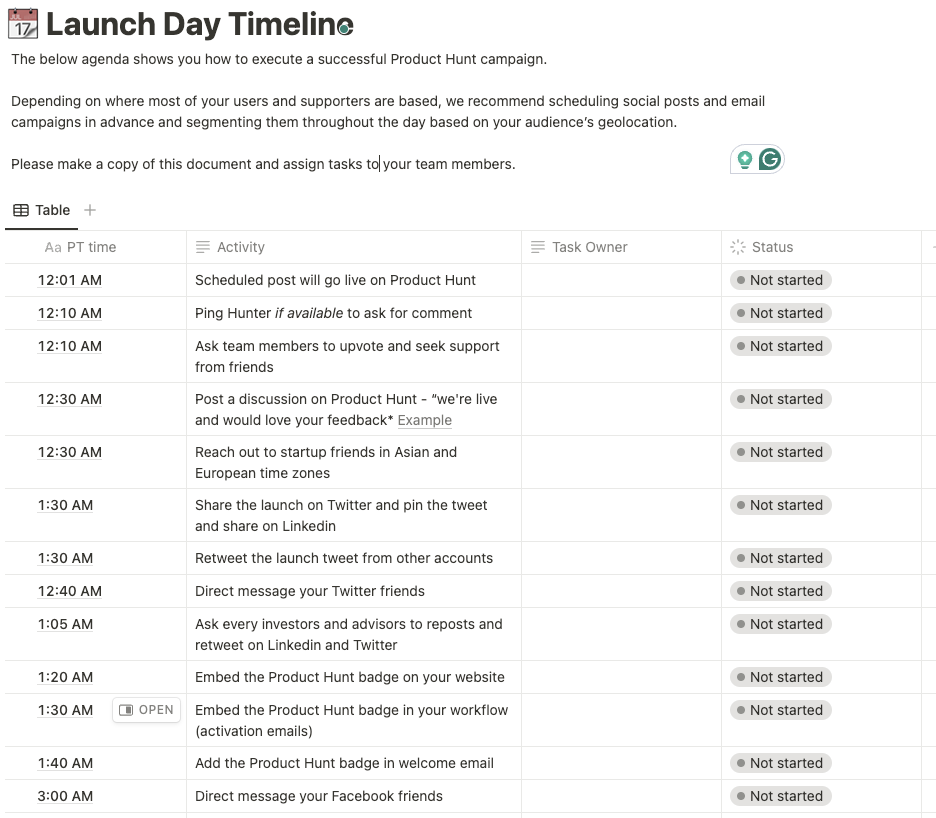
Also, before the big day, double-check your preparations:
- Engagement plan: Have a clear plan for responding to comments and engaging with the community on Product Hunt throughout the launch day. We recommend having two or three team members on standby who can answer questions with different perspectives. Batching the response process in two-hour intervals usually works best to stay on top of it while keeping your sanity.
- Monitoring: Set up a schedule to keep an eye on your product’s performance on Product Hunt, and be ready to adapt your strategy in real time.
- Personal touch: Reach out to your contacts personally, especially those with a strong Product Hunt presence. A personal message goes a long way.
- Team effort: If you’re launching in-house, get your entire team involved. Have them reach out to their networks and inform them about the upcoming launch.
Pro tip from Rajiv Ayyangar (CEO of Product Hunt): “On launch day, don’t forget to use an embed on your web page that shows live upvotes. It’s a great way to help your community know about the launch, plus it creates some excitement and shows visual engagement, since the upvotes are live-updating. Plus, you can keep the badge up afterwards.”
4. Pick the right day of the week: your goals determine your day
Picking the right day of the week to launch according to your objectives is a crucial part of successful campaign planning, and one that often gets overlooked by startups. Once you have decided what your launch goals are, pick a day that increases your chances of hitting those objectives.
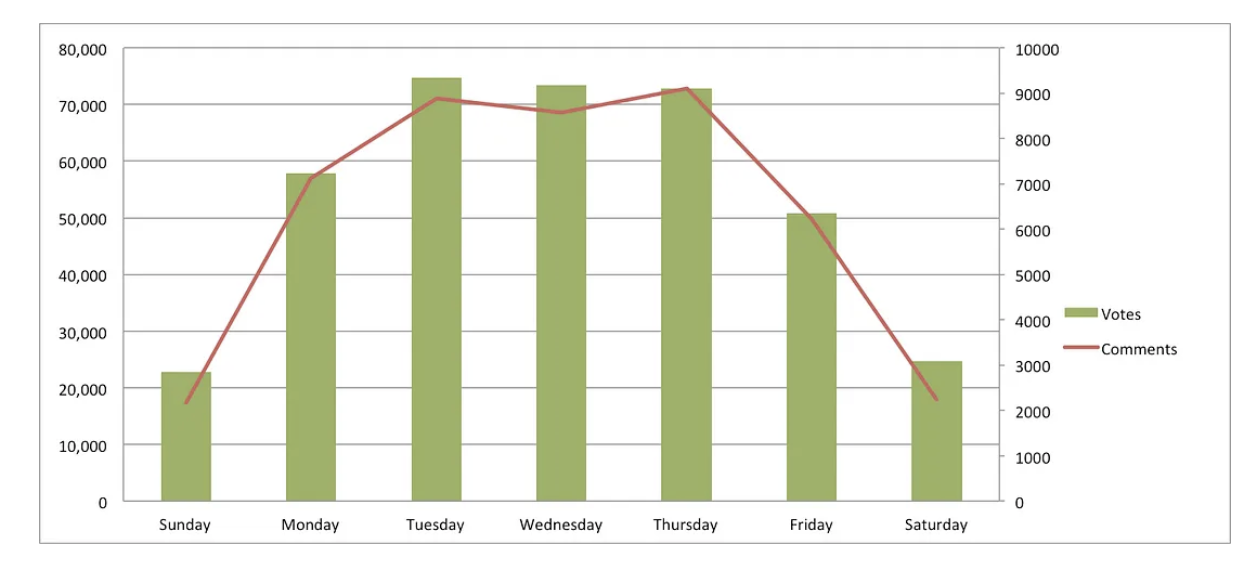
Source: https://compile.blog/product-hunt/best-time-to-post/
Mondays and Fridays: These days have great engagement metrics, while having a significantly lower amount of competition. Choose Monday or Friday if getting a higher rank is more important than traffic.
Tuesdays, Wednesdays, and Thursdays: These days have the highest traffic metrics on Product Hunt but also the fiercest competition. Choose one of these days if you are OK ranking in a lower spot but want the highest amount of incoming traffic.
Saturdays and Sundays: These days have the absolute best chances to rank in the #1 spot on Product Hunt but have less traffic than weekdays. Choose one of these days if your priority is to give yourself the best chance to rank in the #1 spot to gain more brand awareness, social proof, and credibility. Once ranked in the top spot, few people will check what day of the week it was.
Most of our clients aiming to boost brand visibility and establish credibility through Product Hunt’s #1 badge tend to choose Mondays or Fridays. For those viewing Product Hunt as just another channel for traffic, the midweek days from Tuesday to Thursday are recommended. Remember, the goals you set are crucial, as your launch date is locked in once the page goes live at 12:01 a.m. Should you have a last-minute change of heart and decide you want the top spot but find yourself launching on a bustling Tuesday competing against giants like ChatGPT 5, you’ll be out of luck.
5. Understand the Product Hunt algorithm: play by the rules
The Product Hunt ranking algorithm is a bit of a black box, but several key factors can influence your product’s visibility:
- Upvotes: It’s not just the number but the velocity and timing that count. A sudden spike in votes might raise flags.
- Engagement: Comments and discussions around your product matter. It shows that the community is genuinely interested. And if you can get reviews or comments from notable Product Hunt users, these will have a significant impact on your ranking, since Product Hunt values users with high “karma” scores.
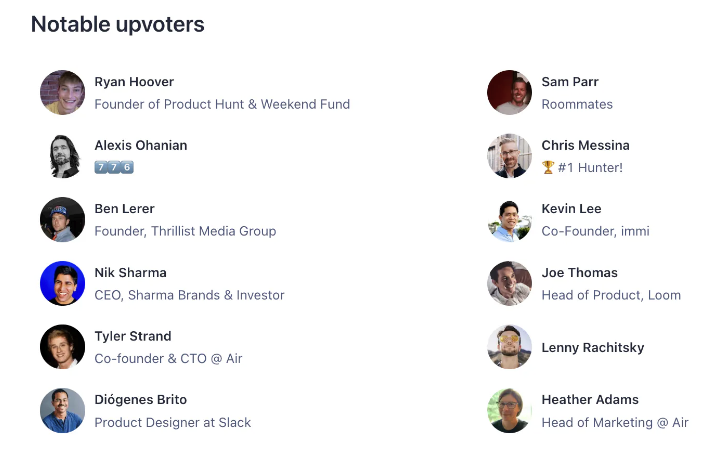
- Upvoter quality: Product Hunt will highlight notable upvotes in your own launch dashboard.
- Product quality: It goes without saying, but Product Hunt values innovative, well-crafted products.
A note on securing hunters with a large following:
In the past, having a big hunter was super-valuable, because all of their followers received notifications when they hunted a new product. But this does not happen anymore, so the additional visibility boost is gone. However, securing the support from a well-known hunter—especially one with an interest and background in your product category—can still be helpful for receiving valuable feedback in the comment sections, as outlined above.
Beware of the pitfalls:
- Launch parties: While it might seem like a great idea to gather everyone for a voting party at launch, simultaneous votes from the same location can trigger spam filters, leading to a shadow ban.
- Community support: In the past, Product Hunt communities (oftentimes these were secretive upvoting rings) would band together to support each other’s launches. However, recent changes have started to crack down on these practices to ensure fairness.
- Bots and fake accounts: Similar to how 500 new signups from your own users on launch day can trigger the Product Hunt algorithm, competitors can intentionally abuse this tactic by deploying bots and flooding products with newly created accounts to provoke deranking and gain an edge for themselves.
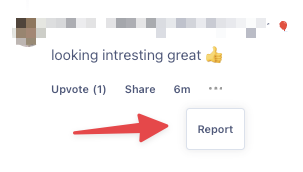
If you notice an influx of comments from new users (as indicated by a red balloon next to their name), use the reporting function to mark them as spam. This helps Product Hunt keep the platform legitimate.
6. Invest in the right assets: spend time on these four elements
When building marketing assets for a Product Hunt launch, it’s crucial to tailor your content to both the platform’s unique environment and its audience of tech enthusiasts, early adopters, and industry influencers. Here are the most critical asset categories to focus on:
Tagline
This is one of the most important marketing assets you will create. The tagline is the main CTA that will incentivize users to click from the Product Hunt home page to your actual product page, which is the first hurdle to overcome. This makes it quite important to choose a tagline that evokes curiosity.
Pro tip from Rajiv Ayyangar (CEO of Product Hunt): “A common failure mode is trying to make a tagline seem grander but in the process losing clarity (e.g. ‘An AI platform to turbocharge...’). Make sure it’s both compelling and clear.”
Example of a great tagline that clearly outlines the value proposition
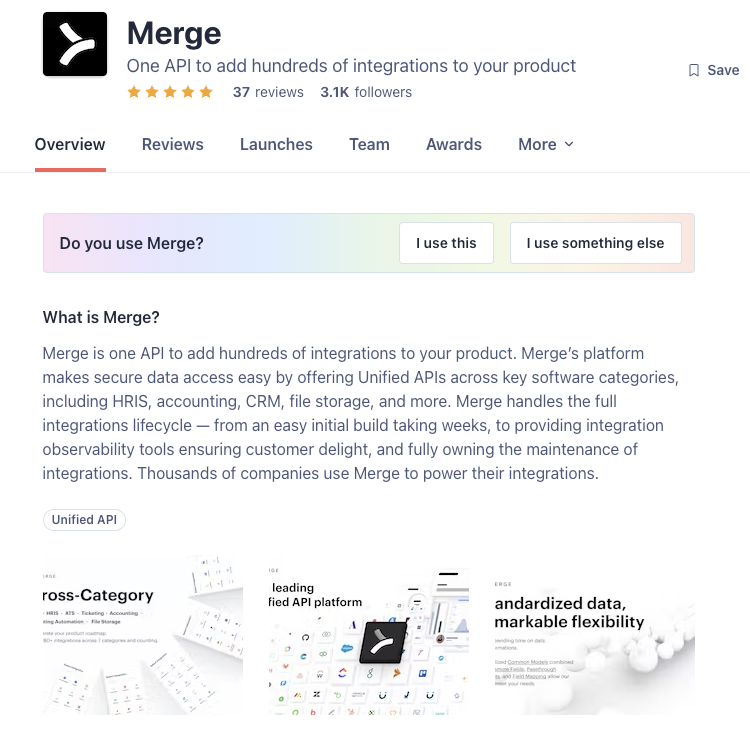
If you can, include an action verb and call people to action.
A few examples to give you a better idea:
- “Make Chrome faster and use 10x less memory”
- “Find the best SEO tools for the job”
- “Launch your own swag store in 3 easy steps”
High-quality images
Ensure that your visuals are high-resolution and clearly communicate your product’s value proposition. Product Hunt allows for multiple images, so make sure to showcase different facets of your product.
Pro tip from Rajiv Ayyangar (CEO of Product Hunt): “To be even more explicit: Show the UI. The PH community wants to know what your product looks like!”
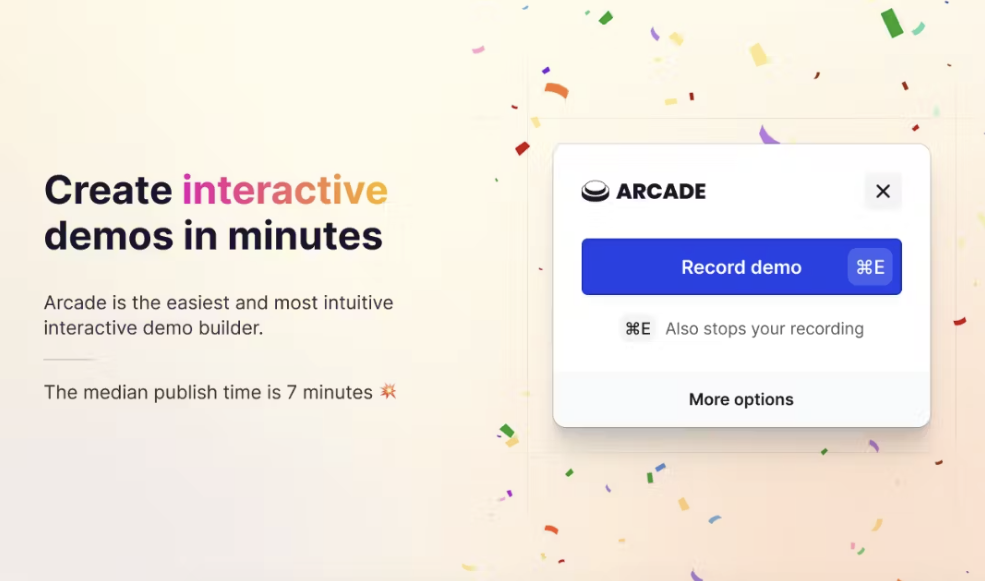
We always recommend embedding captions within the image itself so the audience knows exactly what they are seeing in the product screenshot (see examples below). We recommend a minimum of three images.
Example of a gallery image where the captions straightforwardly outline the value prop:
Video
If you are creating a video, we typically recommend a product walkthrough, which comes across as very relatable. A simple Loom recording of you walking through the product is often a great option that doesn’t require a huge time investment.
Here’s an example of a simple but powerful demo walkthrough created by the maker team:
Highly polished videos often require large time and resource investments (four weeks for a professionally made product teaser can be common, and running up to $10,000 in creative costs). Yet the video is only a small piece of what makes a launch successful.
If you do decide to go with a video, the recommended time is around three to five minutes, and it should be a YouTube link that is not set to private. Try to avoid using a link that will only go live at the time of the launch, in case there are tech issues.
Maker’s comment
This is where you reel the audience in and tell your origin story. Start by describing what pain points you encountered in the past motivated you to create the product. What makes it unique, and how is it different from other competitors in the market? What is your mission for the product, and what value prop are you focusing on?
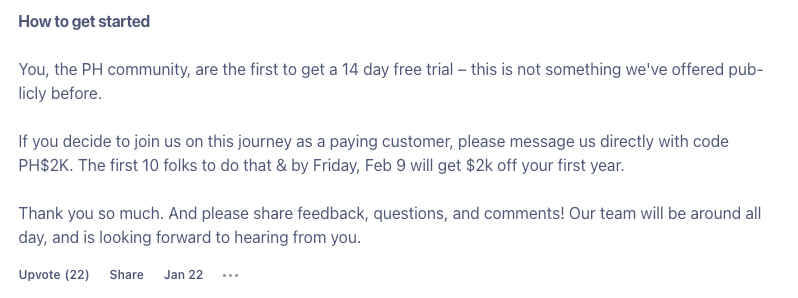
Finish off the maker’s comment with a quick outline of how people can get started using the product, and add a discount code to your CTA if you have one. The Product Hunt audience loves free trials!
7. Going beyond upvotes: comments and reviews matter, for a different reason
When launching on Product Hunt, it’s easy to get caught up in the race for upvotes. But let’s take a step back, rethink that approach, and remember the metrics you set. It’s not just about hitting that top spot; you want meaningful engagement, valuable feedback, and, most importantly, conversion (both on launch day and beyond).
Positive feedback converts an audience
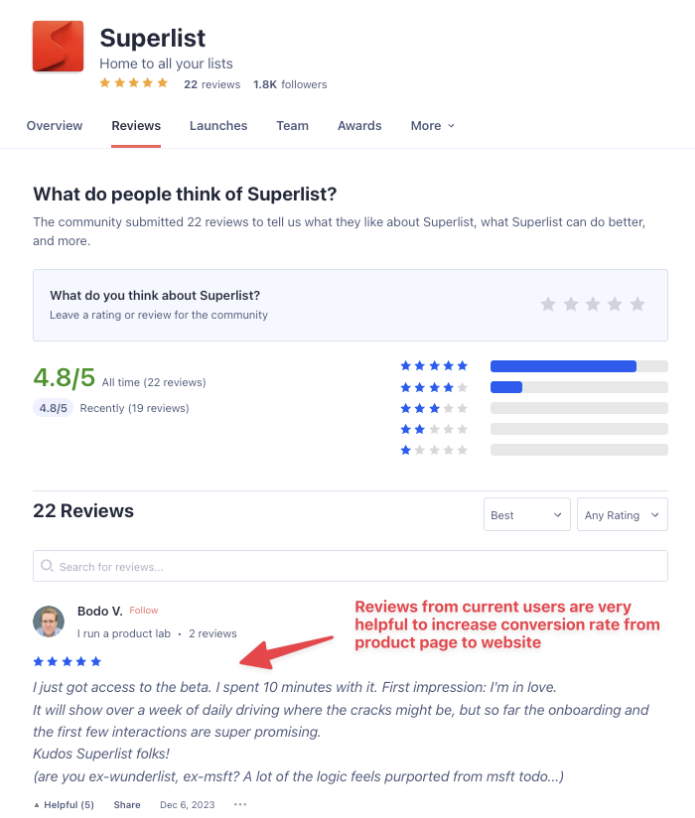
Genuine, positive feedback can dramatically increase the conversion rate from your Product Hunt page to your website. Many users will check out the review section of your product to see what others think. The quality of these reviews will have a big impact on how many people will click through to your website and sign up. Think of this as the Amazon reviews section for SaaS products. One-liner reviews don’t drive purchasing decisions. If you can get some of your current power users to chime in on what they love about your product, this will usually drive the best results.
The power of engagement
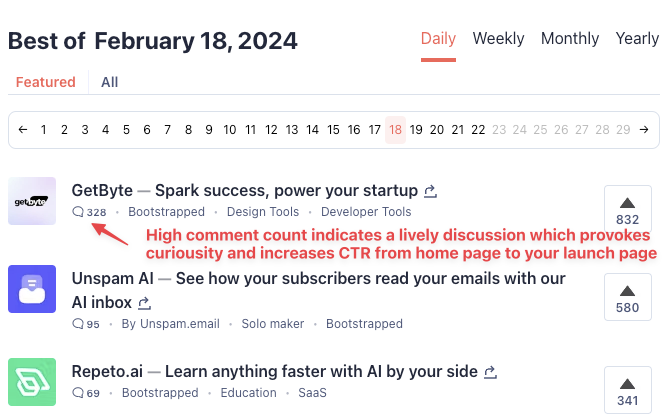
Engagement in the form of comments on your launch page can significantly impact your product’s success. While the algorithm values quality engagement over quantity, a high number of comments on your page can increase the click-through rate from the Product Hunt home page to your launch page.
Five myths about launching on Product Hunt that could cost you a ton of time and impact
Myth 1: You need a well-known hunter to succeed
A prominent figure in the tech community hunting your product can give you a visibility boost, but it’s not a make-or-break factor. Success on Product Hunt comes down to the product itself, the story you tell, and how you engage with the community. A well-known hunter might open a few more doors, but engaging, innovative products can and do succeed on their own merits every day. Many of the Golden Kitty award winners from past years launched successfully without a big hunter. Some examples are Dora AI, Bento, Framer AI, and Amie.
Myth 2: Winning Product of the Week or Month is significantly more valuable than Product of the Day
Winning Product of the Week or Month is an incredible achievement and can certainly give you a boost in visibility and credibility. However, it’s not a golden ticket to exponential growth.
Rather than focusing additional resources on maintaining the promotions on the Product Hunt platform to win weekly or monthly titles, it often pays multiple-fold to capitalize on the attention that you have already received, increase free trial conversions, continue to engage with your new users, and iterate on your product based on the feedback you receive.
Myth 3: More upvotes equals higher ranking
It’s a common misconception that the product with the most upvotes automatically gets the top spot. In reality, Product Hunt’s algorithm considers a variety of factors, including the velocity of upvotes, the engagement on your product page (comments and replies), and even the diversity of the upvoters’ geographic areas. Quality and consistency of engagement often outweigh the sheer quantity of upvotes.
Myth 4: Only new products can launch
Product Hunt is not just a platform for brand-new products; it’s a community that celebrates innovation in all its forms.
Significant updates, major new features, or even relaunches of existing products are all welcome. The key is to clearly communicate what’s new, why it’s important, and how it adds value. We’ve seen clients successfully launch on Product Hunt multiple times a year by highlighting new milestones and updates.
Myth 5: Direct linking to your product page will get you penalized
Let’s clear this up: linking directly to your Product Hunt page is not only allowed, it’s encouraged. Product Hunt wants to see genuine interest and engagement with your product, and if those links are driving engaged, interested traffic, that’s a good thing.
Make the most of Product Hunt
A successful Product Hunt launch is a blend of art, science, and a bit of social engineering. By warming up your audience, understanding the Product Hunt algorithm, leveraging your network, and playing the global time zone game, you can significantly increase your chances of making your launch not just visible but truly impactful.
The goal isn’t just to launch, but to launch with a bang that echoes across the Product Hunt community and beyond.
Closing thoughts from Rajiv Ayyangar (CEO of Product Hunt): “Ultimately, a successful launch is about the market resonating with your product and positioning. Think of the market like a gust of wind, and your startup is a sailboat. You’re looking for that gust of wind, but to maximize your chances, you can put the effort in to unfurl your sails—a crisp tagline, using your network, and telling your story well in the launch assets.”
📚 Further study
- Templates for engaging your network for a Product Hunt launch
- Launch-day template agenda
- Product Wars 2—The best new way to monitor your launch day on Product Hunt
If you want to chat with Leo about your Product Hunt launch, learn more here, and grab a time to chat with him here.
Have a fulfilling and productive week 🙏
🔥 Featured open role: PM, Projects @ Notion
We recently partnered with Notion to help them scale their PM team. One role that’s particularly interesting to me is an opportunity to own the end-to-end Project Management experience within Notion. If you’d like to get referred directly for this role, follow this button:
If you’re hiring and want to work with us, apply here. Our team will reach out if we think it’s a good fit. Note, we primarily work with fast-growing U.S.-based startups.
If you’re finding this newsletter valuable, share it with a friend, and consider subscribing if you haven’t already. There are group discounts, gift options, and referral bonuses available.
Sincerely,
Lenny 👋