Hello, I’m Lenny, and welcome to a🔒 subscriber-only weekly edition 🔒of my newsletter. Each week I tackle reader questions about product, growth, working with humans, and anything else that’s stressing you out at the office. Send me your questions and in return, I’ll humbly offer actionable real-talk advice.
🚨 Exclusively for paid-subscribers: In the coming weeks I’m going to opening up a private online community, exclusively for paid subscribers. If you’d like to check it out, get on the waitlist here (already 100+ strong):
Join the online community
Q: I loved your post about optimizing conversion, but how do you decide what percentage of resources to allocate to each conversion lever (focus, motivation, friction)? And which lever tends to be most impactful?

Oh, the joys and sorrows of prioritization.
Though there’s never going to be a one-size-fits-all answer — it depends on how mature your product is, who you users are, and what’s already been optimized — there are some rules of thumb that have served me well.
Below, you’ll find my suggestions, PLUS as a big bonus, I’ve asked three super-smart growth friends (Lex Roman, Jeff Chang, and Isaac Silverman) to share their perspectives.
One thing you’ll notice is that although there are many ways to look at it, in the end it always comes down to your best guess at ROI — the ratio of (1) effort to launch, and (2) expected impact. And all of this is meant to help inform that latter question, the expected impact.
As a refresher from the post you referenced, when approaching optimizing a funnel, I suggest focusing on three primary levers:
- Maintaining user focus as they move through your flow 🧐
- Maintaining user motivation to keep moving through your flow 🤗
- Reducing user frictionso that they can easily move through your flow 😄
Now, let’s look at how to decide which levers to prioritize.
My personal rules of thumb for prioritizing conversion levers:
- I’ve found the most upside when optimizing Motivation (e.g. reminding the user why they should finish),followed by Focus (e.g. reducing distractions), followed by Friction (e.g. making it easier). So I’d ideate in that order. See the previous post for examples of projects within each of these buckets.
- In practice though, you’ll naturally end up spending most of your time reducing friction, because there are fewer opportunities in the Motivate lever (e.g. usually just changing copy) and Focus lever (e.g. usually removing links).
- Always start wide ー ideate across each of these levers, test a few ideas within each, and see where you find the most opportunity in your particular situation. Then double-down.
- Look at what's worked in the past, and keep digging until you run out of high ROI opportunities. This is boring, but also the most fruitful.
- Make sure to include a mix of high-risk-big-changes and low-risk-small-changes. The small stuff usually helps you make consistent forward progress, while creating cover for the big changes (which occasionally lead to a step-function improvement).
I’ve found these heuristics to be broadly true no matter the company, stage, or market, but again it depends heavily on how much has already been done to optimize your product. If a previous team has spent a lot of time reducing friction, try focusing on increasing Motivation or Focus.
Now, as promised, here’s much more advice from three very smart growth minds who generously offered to chip in on your question:
Jeff Chang — Growth Engineer @ Pinterest
I split conversion levers into intent (motivation) and ease (focus, friction), since focus and friction are usually related. You will have to work on both, but the one to work on first depends on each flow and type of user. Every flow has different current intent and ease levels.
- If intent is already high (ex. somebody types your home page URL directly into their browser bar), there is less opportunity in increasing intent. Perhaps consider working on ease instead. This is why you see home pages of 5+ year old products be very bare and simple. The user likely already knows what the product is, so focus on ease.
- If intent is low (ex. somebody searches a generic term and lands on your page, not knowing what your product is), opportunities like educating the user to increase intent are bigger
Lex Roman — Growth Designer
If I'm working across a big section of a product (i.e. not just one screen), I find it helpful to walk through the impact step by step.
I've started creating an "Impact Calculators" to help me think through where to focus. Here's an example but you can include anything you find helpful, like Lenny's motivation/focus/friction framework or Jeff Chang's intent/ease framework. It's about structuring your thinking.
Often, you'll identify something that you could easily move but it won't mean much towards your central goal. You can pair this calculator with customer and data inputs to figure out where you'll get the most back for your efforts.
Isaac Silverman — Former Head of Uber Rider Growth
Here’s an approach I’d recommend:
Audit your funnel to identify potential reasons for drop-off
Research your audience. Make sure you have a basic understanding of what people want and why they’re using the experience. Consider talking to marketing teams to see which messaging tends to be most effective to help understand motivations.
- Go through your own flow. Put yourself in the shoes of your major customer groups. Where do you find yourself getting stuck, confused about what to do next, or distracted? Does the messaging speak to core motivations? Use different devices and browsers to try to break the experience in as many ways as possible.
- Study others. Consider watching non tech-savvy friends or older relatives try to get through the experience. Where do they get stuck or confused?
- Look at the data. Look at your funnel step by step and compare across user groups (device, browser, demographic, channel, etc.). Are there any sharp, unexpected, or inconsistent drop-offs? What conditions decrease or increase conversion (page load speed, # of results, etc.)?
- Convert your hypotheses into concrete ideas
Prioritize & execute based on ROI
Estimate out impact, probability of success, and cost (often in terms of engineering days).
- Generally try to do the highest expected impact / cost items first.
Create a strong feedback loop
Run lightweight tests to reduce risk for costly items.
- Go deep where you find heat. Every project you ship is an opportunity to learn about what works or doesn’t.
- Re-evaluate ROI after you get feedback. If you see standout results around a particular hypothesis, double down with additional related feature work. If you see diminishing returns, consider changing focus.
Thanks, friends!
Inspiration for the week ahead 🧠
- Read: In a First, Renewable Energy Is Poised to Eclipse Coal in U.S.
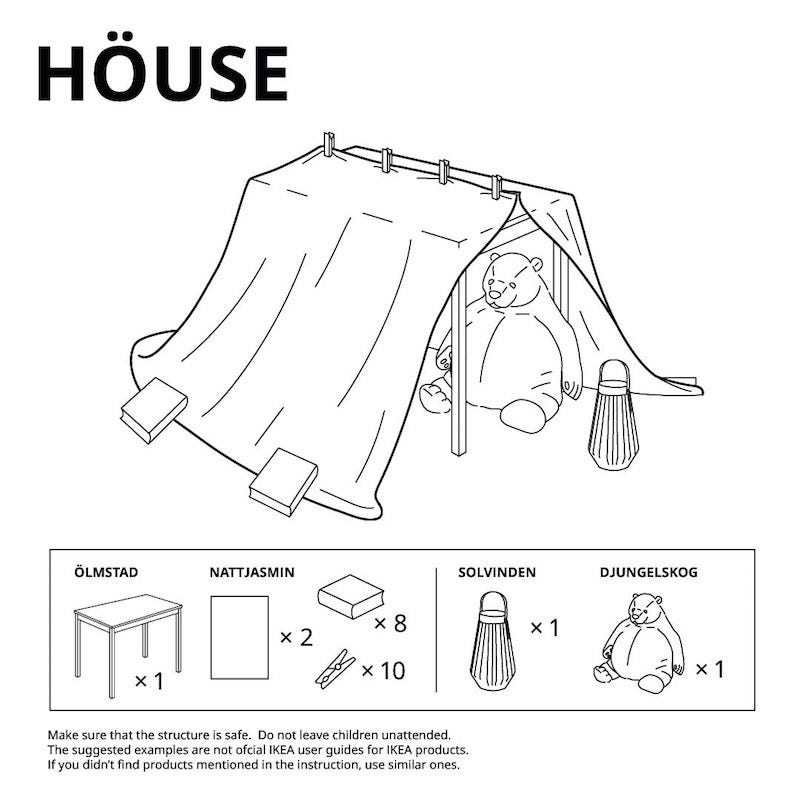
- Build: IKEA Released Instructions on How to Build the 6 Best Blanket Forts For Your Home Quarantine
 3. Watch: The Miracle Sudoku — If you never thought a game of Sudoku could make you tear up, you’re wrong
If you’re finding this newsletter valuable, consider sharing it with friends, and subscribing if you aren’t already.
Sincerely,
Lenny 👋