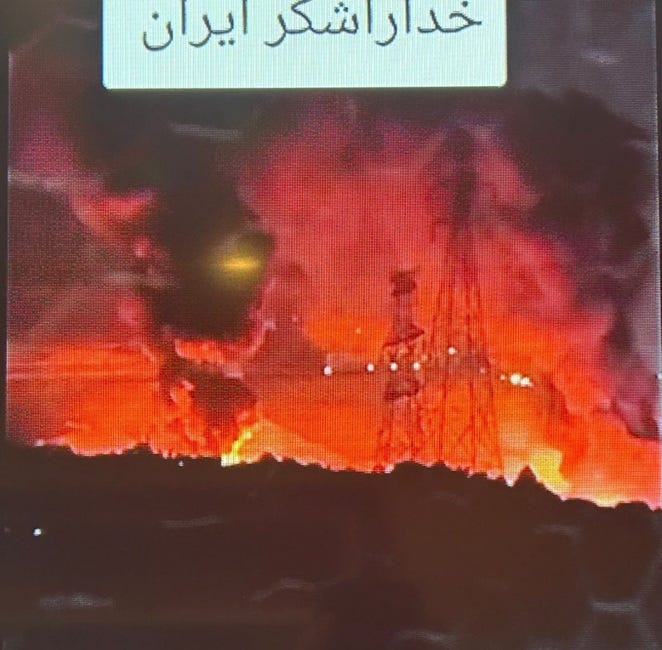
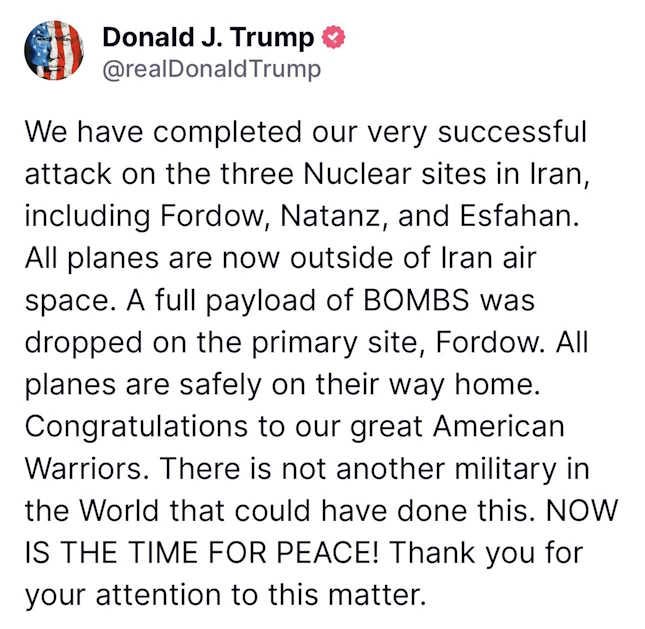
Well, I suppose Trump doesn’t actually chicken out of everything. The U.S. has bombed Iran’s three nuclear enrichment facilities. Here was Trump’s announcement of the strikes on social media:
The consequences of these strikes aren’t yet clear. I’ve seen a lot of hyperventilating takes about how World War III is now underway, but this seems obviously false. The world may indeed be in the foothills of WW3, but even if it is, it’s highly doubtful that strikes on Iran’s nuclear facilities will be what push us over the edge. Iran has friendly relations with China and Russia, but neither one seems to have any interest in coming to Iran’s aid in the current conflict — China doesn’t appear to be interested in getting in wars outside its own neighborhood, while Russia is simply too preoccupied with its war in Ukraine.
Nor do I expect the strikes on Iran to lead to a U.S. “boots on the ground” invasion. First of all, there’s the TACO factor — Trump was only willing to conduct some very limited airstrikes, and only targeted narrowly at Iran’s nuclear program, and he was only willing to do it after Israel had already neutralized much of Iran’s long-range strike capability. So far, the best Iran has been able to do in this war was to kill a few dozen Israeli civilians, and even its ability to do that much might have been mostly neutralized. Iran’s leaders are issuing dire threats against the U.S. in response to today’s strike, but there’s just not much they can do other than take some weak potshots at U.S. bases in Iraq.
So Trump was taking almost no military risk with these strikes — they don’t show a new, bolder, braver Trump. And the President knows that public opinion is strongly against a war with Iran:
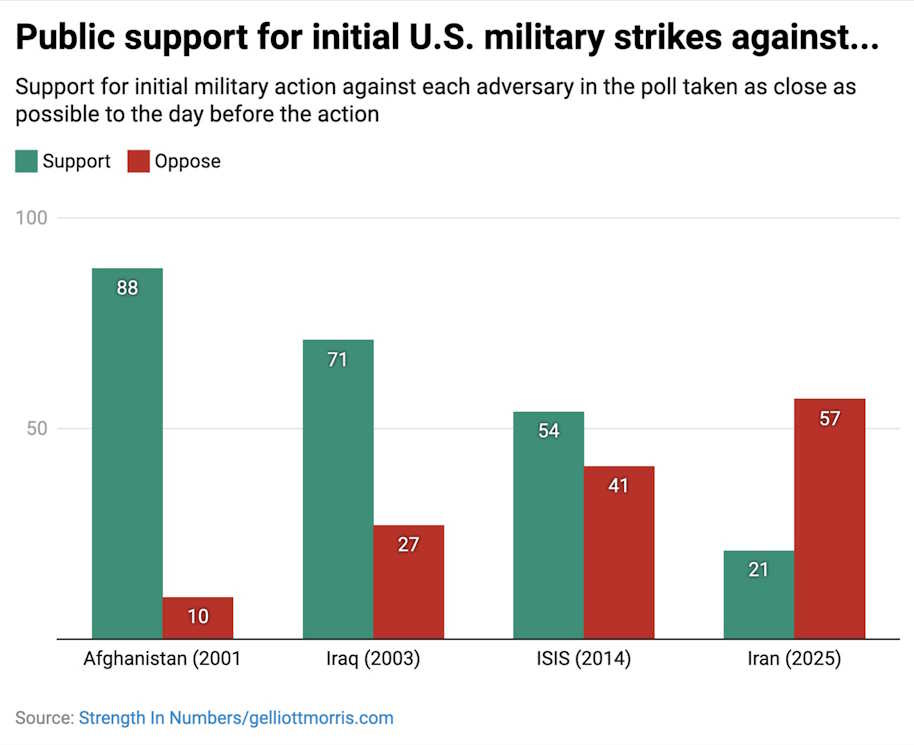
So while these things are always hard to predict, the likeliest outcome seems to be that Trump simply conducts airstrikes until Iran’s three nuclear facilities have been destroyed (if that isn’t the case already), and then backs off and leaves the conflict to the Israelis. Trump’s assassination of Iranian general Qasem Soleimani in 2020 turned out similarly.
But even though a major war seems highly unlikely, it’s still worthwhile to consider possible economic consequences. When we’re talking about the Middle East, that really means one thing: oil.
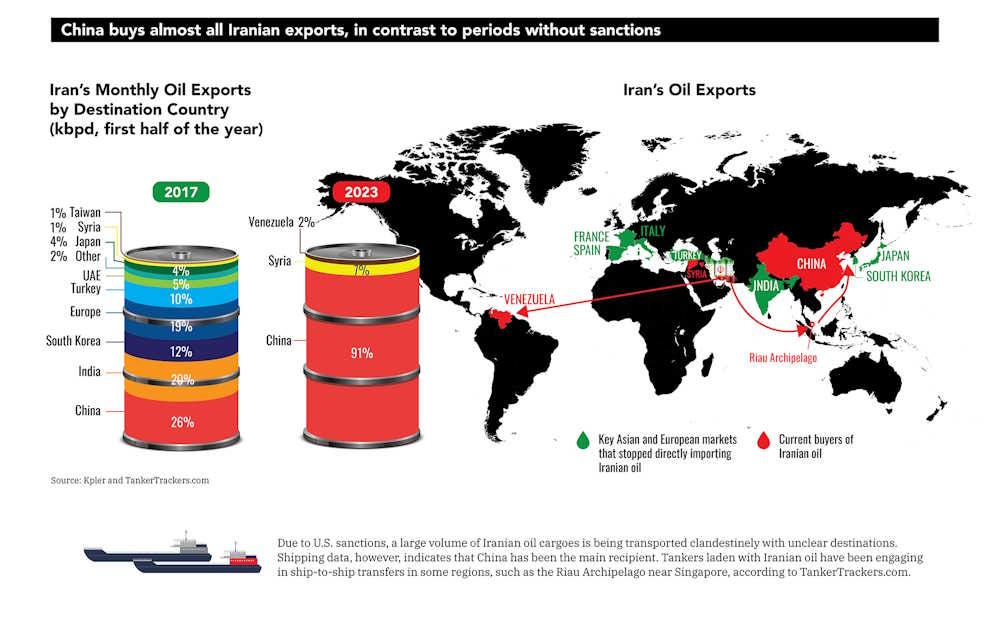
There are two ways that the Iran war might affect oil prices. First, Israel’s strikes on Iran may reduce Iran’s own oil exports. Iran is responsible for about 3-4% of world oil production, though only around a third of that gets exported. Almost all of Iran’s oil exports go to China:
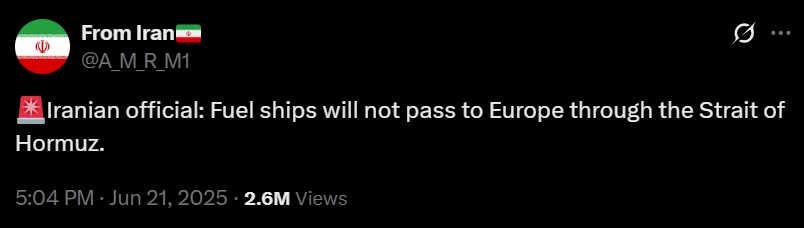
Second, and more importantly, Iran may close the Strait of Hormuz, which is the main transit point for Middle Eastern oil. About one fifth of all global oil supply goes through the Strait of Hormuz, so if it were closed off, that would be a very big deal. Iran has threatened to close the strait throughout the conflict with Israel, and in the wake of the U.S. strikes, it has reportedly announced that it’s closing the strait to all ships bound for Europe:
It’s not entirely clear whether Iran has the military ability to close off the strait, but most analyses I read say that they could probably do it. Iran has a vast and diverse array of weapons that it could bring to bear, and the strait is very narrow, meaning that its weapons wouldn’t have to operate over long range. The Houthi militia, which is supplied by Iran, has shown the ability to almost completely scare away all shipping from the exit of the Red Sea.
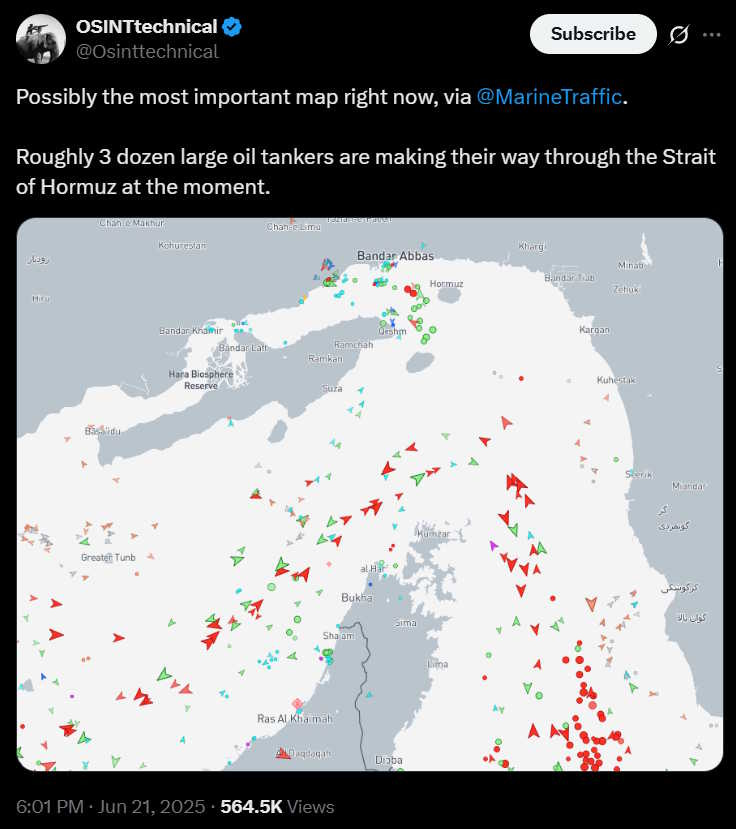
Even if Iran’s forces in the strait could eventually be defeated, the risk of attack would make civilian ships avoid the area entirely. Who wants to try sailing through a war zone? Already, tankers are scrambling to leave the area:
So a lot of people are worried about the impact of Trump’s strikes on the global economy. But to be honest, I think these worries are overblown. And the U.S. itself is even more insulated from oil disruption than other countries.
Why none of this is actually very scary
The first and most crucial thing you have to understand about the oil market is that oil is fungible. Oil is a liquid, meaning you can pump it to a ship pretty easily. And oil is so valuable that the cost of shipping it doesn’t make a big difference. What that means is that to a large extent, who sells oil to whom doesn’t really matter that much. The oil market is more or less a global one, meaning that if you’re an oil consuming country, you end up paying the same price as everyone else.
Here’s a chart of the prices of oil in Texas and in Europe:
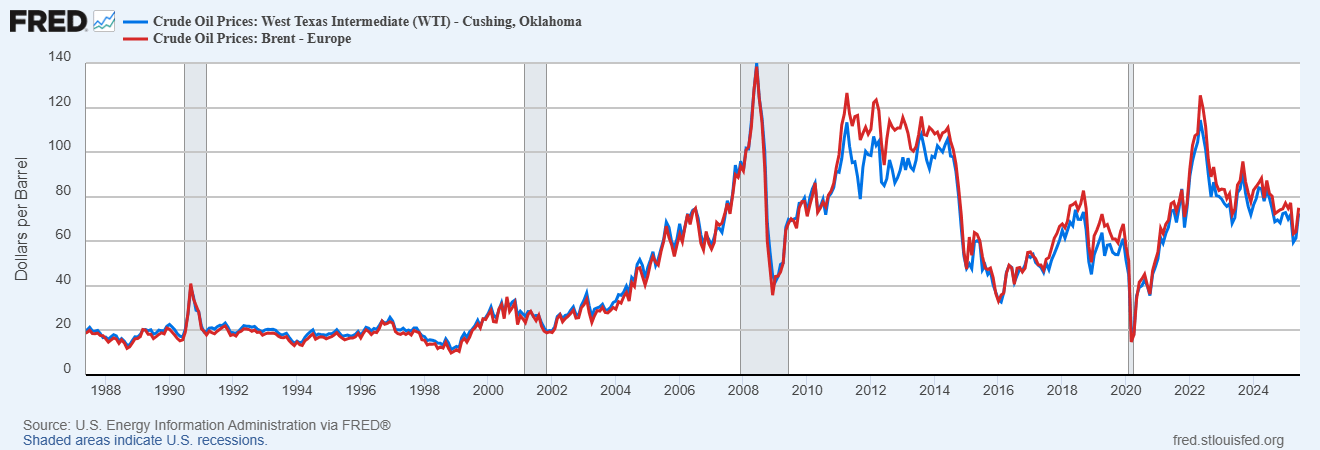
Only for a few years, during the European financial crisis, did these two numbers diverge significantly. Basically, oil prices are the same everywhere, because oil can be shipped anywhere pretty cheaply.
Because oil is fungible, if Iran does actually manage to cut off oil supplies to Europe through the Strait of Hormuz, it won’t actually hurt Europe — or anyone else — very much. First of all, very little of the oil that goes through the strait goes to Europe:
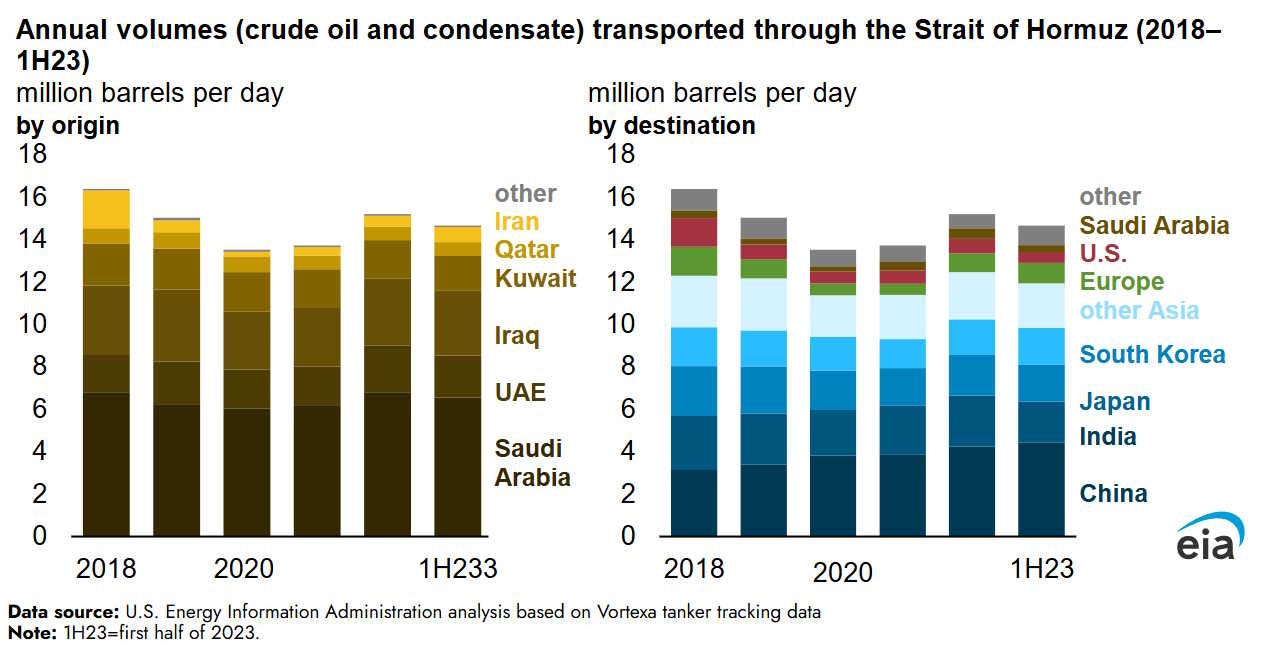
And if the strait is closed to Europe-bound traffic only, countries selling oil through Hormuz to Europe will just sell it to Asia instead. And Europe will simply go buy its oil from somewhere else — instead of from the Middle East, it’ll just buy from the U.S. and Latin America and Canada and Africa. Nor will Europe pay a significantly higher price in this situation, because oil prices are basically the same everywhere.
So closing the Strait of Hormuz to European traffic basically does nothing.
Of course, Iran could close the strait entirely to all traffic, or simply scare away all ships from the strait without formally promising to destroy them. This would halt much of the world’s oil supply, and crash the economies of Iraq, Kuwait and Qatar (who sell most of their oil through the strait). That’s a move that seems highly likely to alienate the world, and legitimize Israel’s attack.
When it comes to Israel bombing Iranian oil fields, the picture is a little more complicated, because of sanctions. A sanctioned country like Iran or Russia has far fewer options in terms of where to sell its oil. Russia and Iran are very dependent on China as a buyer, so China has a ton of bargaining power — the Chinese force the Russians and Iranians to give them oil at a discount. That discount was $6 a barrel. This hurts Russia and Iran — which is the point of the sanctions — and it helps China.
So if Israel were to bomb Iran’s oil fields, it would be China that would suffer the most, because it would be forced to find new suppliers who wouldn’t give it the same sweetheart deal that Iran was forced to give them — and China would end up paying higher prices as a result. Essentially, they’d lose some of the bonus they were getting for being the one major oil buyer who flouted the sanctions regime. But ultimately it wouldn’t be that hard for them to find replacements for Iranian oil. And countries besides China would suffer even less.
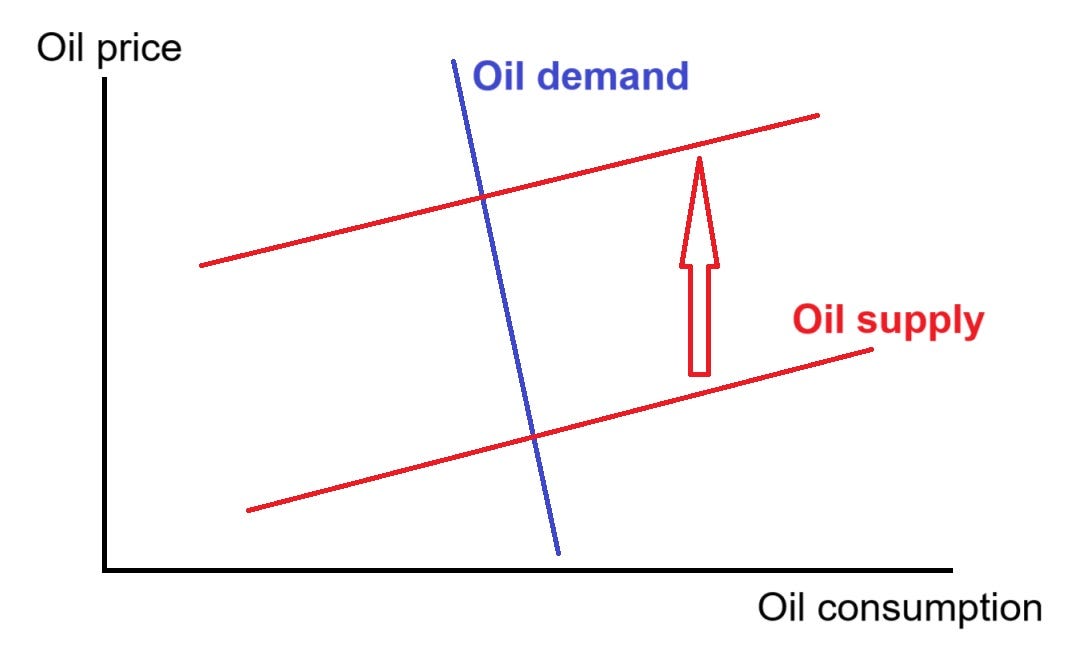
I’m not saying there’s no economic danger here. In fact, there is. Even relatively minor disruptions to oil supplies can raise prices significantly. The second key fact about oil markets is that oil demand is inelastic in the short term.
“Inelastic demand” means that consumers aren’t very sensitive to price changes. Most people who drive to work are going to keep driving even if gas prices go up. Most companies that transport goods by truck are going to keep doing so even if it gets more expensive. In the long run, yes, they’ll switch, but not in the short run.
This means that even a relatively modest decrease in oil supply can send the price shooting up, without much changing the amount of oil that gets consumed. Here’s a diagram of what that looks like:
This is one reason oil prices tend to be so volatile.
So if some ships get scared away from Hormuz and some Iranian oil fields go out of commission due to the war, it could definitely increase global oil prices.
Whether your country is hurt or helped by rising oil prices depends on whether you’re a net oil importer or a net oil exporter. Russia is a net oil exporter, so when oil prices go up, that’s good for Russia’s economy. The war in Iran may unfortunately help Russia continue to prosecute its war in Ukraine without fear of economic collapse.
Similarly, Europe (except Norway), Japan, Korea, and China are all net oil importers. When oil gets more expensive, their economies suffer. So the Iran war, and Trump’s escalation, could hurt all of those industrialized countries.
How about the U.S.? We’re in the interesting position of having a lot of oil imports and a lot of oil exports.1 In fact, they roughly balance out:
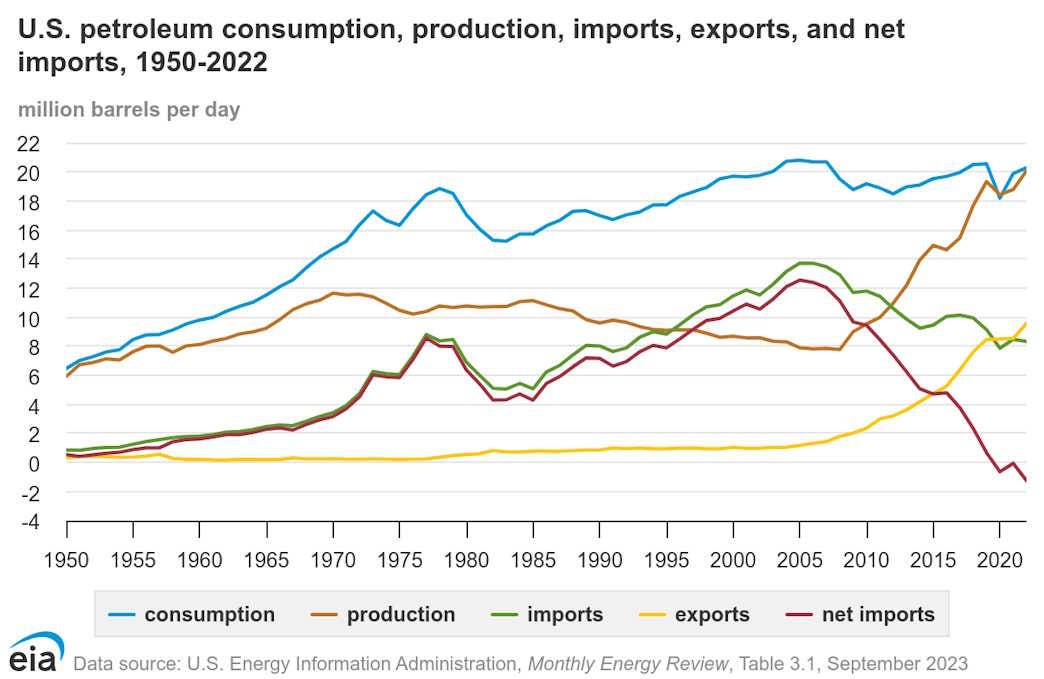
The U.S. is pretty much perfectly hedged against changes in oil prices. If prices go up, the U.S. oil industry benefits, and oil-using industries — transportation, construction, manufacturing, etc. — suffer. But the overall impact on the economy is very small.
This stands in contrast to earlier decades, when the U.S. was a major net oil importer. Back then, there was a lively economics debate whether high oil prices caused recessions or whether that was a statistical illusion from the fact that recessions make oil prices go down. But whichever side of that debate was right, it’s probably less relevant since the shale boom turned America into a slight net oil exporter.
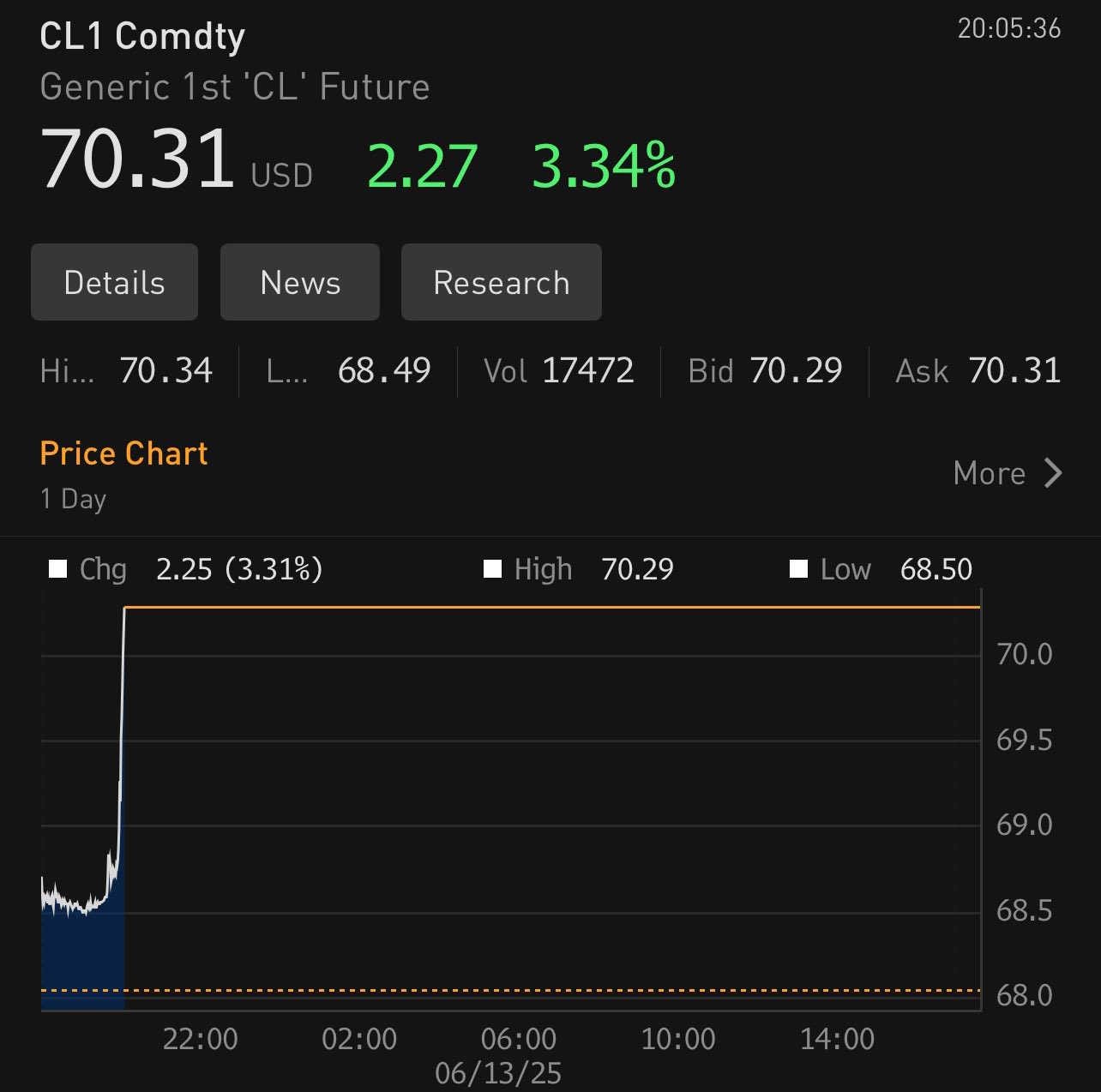
So the Iran war threatens America less than it threatens our allies — and our chief rival, China. But even as far as those other countries are concerned, it’s not clear how big the threat is. Oil futures jumped when Trump bombed Iran, but only by a couple of dollars:
In fact, there’s even an outside chance that the war could end up lowering oil prices in the long run. If the Iranian regime is toppled and replaced with a more neutral one, or if Iran agrees to stop pursuing nuclear weapons, it could lead to the end of sanctions on its oil industry. Iran would then increase oil production, both because it would be getting a better price on its oil, and because it could get international investment to develop more fields. This would cause a glut on the world market, leading to falling prices and giving a boost to industrialized economies.
So to sum up, I just don’t think the economic consequences of Trump’s attack on Iran are worth worrying about very much, especially if you live in the United States. I know a lot of people are a bit freaked out right now, but economic devastation is one less thing you should be worried about.
The reason for this is interesting. Crude oil comes in various different types, and they require different types of refineries. Our big boom in oil production is almost all shale oil, also known as “tight oil”. But our refineries were mostly built before this boom, so they’re built to handle different types of oil. Thus, we export our oil to countries that refine a lot of shale oil, and import oil from countries that produce the type of oil that fits with our refineries. This slightly wacky situation is made possible by the fact that oil is so incredibly cheap to transport.